
Politics
FG Reveals Fresh Strategy to End Terrorism, Banditry, Kidnapping
The Federal Government has unveiled a multi-pronged security strategy to tackle terrorism, banditry and kidnapping,

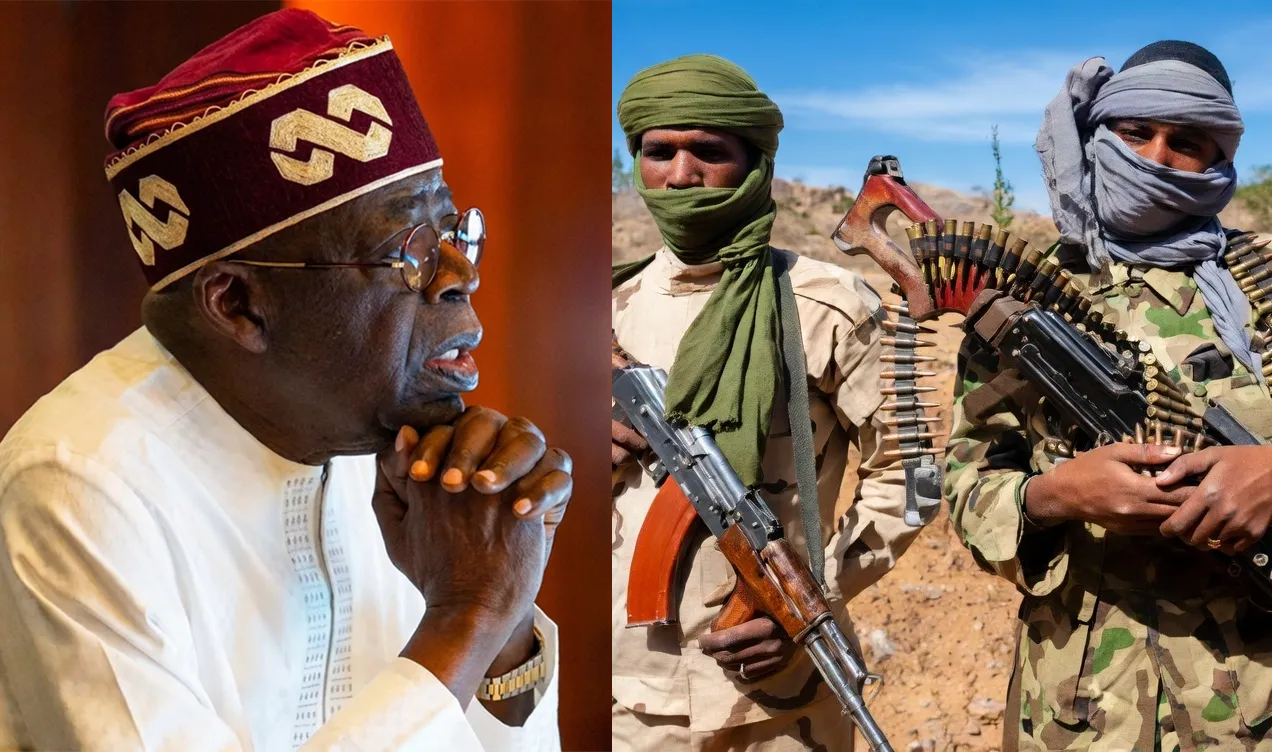
- The Federal Government has unveiled a multi-pronged security strategy to tackle terrorism, banditry and kidnapping,

The Federal Government has outlined new measures aimed at ending terrorism, banditry and kidnapping across Nigeria, saying it is strengthening security agencies, deploying advanced technology and expanding intelligence operations to combat rising insecurity.
The Special Adviser to the President on Media and Public Communications, Daniel Bwala, disclosed the plans during an appearance on The Link Up Podcast, hosted by echoRoom.
According to Bwala, the Tinubu administration is significantly increasing the number of security personnel, arguing that Nigeria’s current security workforce is inadequate for its growing population and vast land mass.
“We are investing in training and retraining. First of all, we’re investing in recruiting more security personnel because the one we have, they are not sufficient to match with the population and the land mass,” he said.
Forest guards to tackle terrorists
Bwala revealed that part of the recruitment drive would focus on deploying forest guards to areas where criminal groups operate.
He explained that forests have become safe havens for terrorists and bandits, who also exploit the country’s mineral resources through illegal mining.
“We needed to send people to the forest, so we have to recruit more and send them as forest guards. Those ones, the terrorists, are also stealing our mines and resources,” he said.
Police, military and DSS expansion
The presidential aide said the government was increasing the strength of the Nigerian Police Force, the Armed Forces and the Department of State Services (DSS), while also enhancing marine security operations.
“We also have these marine guys there. We’re increasing police, soldiers and DSS. So in terms of personnel, we’re increasing them,” Bwala stated.
He added that the government was also collaborating with paramilitary agencies and had licensed private security firms to provide additional support where necessary.
Tinubu withdraws police officers from VIPs
Bwala disclosed that President Bola Tinubu had already ordered the withdrawal of police officers attached to VIPs, noting that officers who fail to comply would soon be identified and sanctioned.
Government deploying drones and surveillance technology
Beyond manpower, Bwala said the government was investing heavily in modern surveillance technology to improve intelligence gathering and security operations.
“We’re investing in technological devices that, in modern days, help us when we are sleeping, which is the drone system, interception and all that,” he explained.
According to him, security agencies now rely on drones, intelligence gathering and reconnaissance missions to monitor criminal movements and launch operations with minimal risk to civilians.
He noted that security forces sometimes delay attacks until suspects leave populated communities to avoid civilian casualties.
Military partnership with the United States
Bwala also disclosed that Nigeria had strengthened security cooperation with neighbouring Sahel countries while expanding military collaboration with the United States.
He said special forces from both countries recently completed a round of joint operations, while additional personnel remained in Nigeria to provide specialised military training.
However, he declined to disclose details of the training, saying such information remained classified for security reasons.
“We will not tell the world the nature of the training. We don’t want our enemies to know. There are certain things that are classified because we don’t say it, people tend to think government is not working,” he said.
Kidnapping has become a ‘crisis economy’
Bwala described kidnapping as a growing “crisis economy,” explaining that not all abductions are carried out by terrorists.
According to him, investigations have shown that some kidnappers are ordinary Nigerians, including people who know or even live near their victims.
“The kidnappings and the abductions you see, which is a crisis economy, is done sometimes by the terrorist and at other times by Nigerians. Sometimes when it is done, they arrest people and discover that they are neighbours,” he said.
Community policing to be expanded
The presidential spokesman also revealed plans to strengthen community policing across the country.
He cited Lagos State’s neighbourhood marshal initiative as an example of the type of grassroots security network the government wants to encourage nationwide.
According to him, stronger collaboration between residents and security agencies would improve intelligence gathering and help prevent crimes before they occur.
Security agencies targeting compromised officers
Bwala further disclosed that security agencies were investigating and arresting corrupt law enforcement officers suspected of collaborating with criminal groups.
He pointed to the recent arrest of a senior police officer by mine marshals as evidence that the government was determined to tackle internal compromise within security institutions.
He also argued that insecurity often increases during election periods because criminal groups take advantage of heightened political activities.
Bwala urged Nigerians to assess the government’s security performance after the election cycle, insisting that the administration’s ongoing reforms would deliver long-term improvements in the fight against terrorism, banditry and kidnapping.






IPOB Embraces Hausa Nation and All Northern Ethnic Nationalities in Historic Solidarity Declaration for Universal Freedom
IPOB has declared solidarity with Hausa people and other ethnic nationalities in Northern Nigeria, calling for a peaceful...

Nnamdi Kanu’s Legal Team Raises Fresh Questions Over Omotosho’s Judgment in Part 3 Commentary
Onyedikachi Ifedi, Esq., has questioned the legal basis of Nnamdi Kanu’s conviction, alleging irregularities involving Count 7....


IPOB Denies Plans to Resume Monday Sit-at-Home, Rejects Alleged Police Intelligence Report
IPOB has dismissed a purported police intelligence report alleging plans to resume Monday sit-at-home enforcement in the South-East...

‘No Negotiations, Only Referendum’ — Kanu’s Message to American Veterans of Igbo Descent
IPOB leader Nnamdi Kanu has reaffirmed his demand for a referendum on Biafra's self-determination, insisting he will reject any political...

IPOB Condemns NYSC Abductions in Imo, Accuses Uzodinma of Political Conspiracy
IPOB has condemned the reported abduction and rescue of NYSC members in Imo State, denying involvement and accusing Governor Hope...

Ambrose Alli University Lecturer Dies in Hotel Room After Sexual Encounter With 21-Year-Old Woman
A senior lecturer at Ambrose Alli University, Ekpoma, Dr Matthew Uwuigbe, has died in a hotel room in Edo State...


Omotosho’s First Jurisdictional Failure — The Court Lacked Authority to Try Kanu
The Mazi Nnamdi Kanu Global Legal Consortium has alleged that the Federal High Court lacked jurisdiction to try Kanu on...


‘No Government Without a Country’: IPOB Rejects Self-Appointed Biafra Government Officers
Mazi Chris Nwaọgụ has reiterated IPOB’s demand for Nnamdi Kanu’s freedom and Biafra’s restoration, while calling for Kanu’s appeal to...

Sokoto Declaration: Emma Powerful Dismantles False Claims, Reaffirms Onyendu Mazi Nnamdi Okwu Kanu’s Referendum Position
Kanu’s camp has rejected claims that he did not approve or co-sign the Sokoto Declaration, while stressing that he does...


Kanu’s Unlawful Conviction, the Law That Was Already Dead, and the Shame That Is Waiting for Nigeria’s Judiciary
Christopher Chidera, Esq., has challenged the legal basis of Nnamdi Kanu’s conviction, arguing that the trial court relied on a...