
News
‘Why We Can’t Use Condoms With Our Wives’ — Nigerian Men
Many Nigerian men refuse condoms and vasectomy, leaving women to shoulder the burden of family planning, experts say.

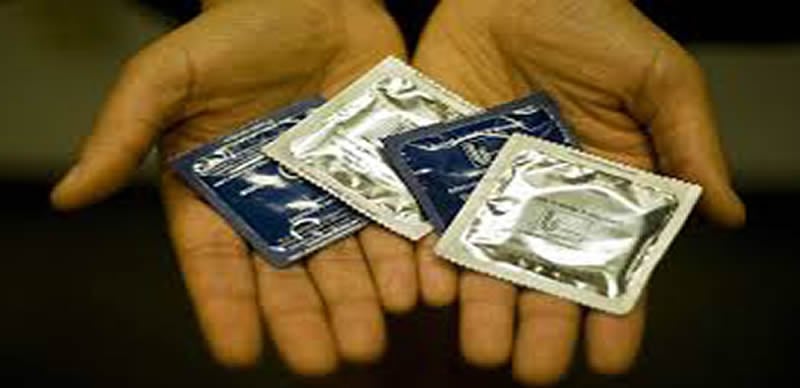
- Many Nigerian men refuse condoms and vasectomy, leaving women to shoulder the burden of family planning, experts say.

Many Nigerian husbands continue to reject condoms, vasectomy and other male contraceptive methods, citing cultural beliefs, religious convictions, fears of reduced masculinity and diminished sexual pleasure, forcing many women to bear the burden of family planning alone.
This was revealed in interviews conducted by PUNCH Healthwise, where married men, women and medical experts shared why male participation in contraception remains low despite growing awareness of family planning.
One of the women interviewed, Amara Nwobi, a mother of four, said she had suffered severe side effects after trying several contraceptive methods but still could not convince her husband to use condoms.
According to her, every contraceptive she had used caused complications ranging from irregular menstruation and persistent headaches to bloating.
Despite her health struggles, she said her husband refused to consider using condoms.
“He’ll say, ‘After I paid my wife’s bride price in full, I can’t use a condom with my wife. If I use it with her, what should I then use with Olosho?’”
Nwobi said her husband simply encouraged her to continue searching for another contraceptive method that would not affect her health.
Men explain why they avoid condoms
Several married men who spoke with PUNCH Healthwise admitted they were uncomfortable using condoms with their wives.
A Lagos-based software engineer identified as Mahatma said condoms reduce intimacy because they prevent skin-to-skin contact.
He added that since he trusted his wife and was not worried about sexually transmitted infections, he saw little reason to use condoms during marital sex.
Although he expressed support for shared responsibility in family planning, he said he was unwilling to undergo a vasectomy.
Another respondent, Ojonrewaju Lanre, a print media practitioner and father of three, said cultural and religious beliefs shaped his decision.
According to him, he has never used a condom with his wife throughout their 13-year marriage.
He insisted that marriage should be consummated naturally and disclosed that he relies on the withdrawal method instead.
Lanre also rejected vasectomy, arguing that concerns over paternity disputes and perceptions of masculinity discourage many men from considering the procedure.
‘Men enjoy sex better without condoms’
Another respondent, Oluwamuyiwa Oyedele, said many married men feel safe having unprotected sex with their wives because they believe their partners understand their fertility cycles.
He also noted that many simply prefer sex without condoms because it feels more pleasurable.
However, he stressed that paying a bride price does not give any husband the right to ignore his wife’s comfort during intimacy.
Similarly, Abuja-based client relationship manager Odedeyi Williams admitted many men prefer “raw” sex and often rely on withdrawal to prevent pregnancy.
Although he supports condom use and welcomes the idea of future male contraceptives, Williams maintained that family planning is largely viewed as a woman’s responsibility because women carry pregnancies.
Experts blame myths and cultural beliefs
Medical experts, however, warned that such beliefs are rooted largely in misconceptions.
President of the Association of Urological Surgeons of Nigeria, Prof. Nuhu Dakum, explained that many men avoid condoms because they believe the devices reduce sexual pleasure and imply a lack of trust between partners.
He added that widespread myths also discourage men from embracing vasectomy, with many wrongly believing it reduces libido, affects testosterone levels or diminishes masculinity.
According to him, none of those claims is medically accurate.
“No man’s dignity is reduced because he uses any contraception. It would reduce the burden on women if men also get involved in contraception,” Dakum said.
He urged men to seek proper medical information rather than rely on cultural misconceptions.
Professor of Urology Oseremen Aisuodionoe-Shadrach also attributed the low adoption of male contraceptives to deeply rooted cultural beliefs that family planning is solely a woman’s responsibility.
He explained that because women carry pregnancies, many societies traditionally expect them alone to prevent them, making it difficult for men to embrace contraceptive methods such as condoms and vasectomy.
Women hope men will share the responsibility
Several women interviewed said they wished more contraceptive options would become available for men so that family planning responsibilities could be shared more equally.
Health experts also recommended involving men in family planning counselling alongside their wives, saying greater awareness could help dispel myths and encourage more couples to make informed decisions together.






IPOB Embraces Hausa Nation and All Northern Ethnic Nationalities in Historic Solidarity Declaration for Universal Freedom
IPOB has declared solidarity with Hausa people and other ethnic nationalities in Northern Nigeria, calling for a peaceful...


Nnamdi Kanu’s Legal Team Raises Fresh Questions Over Omotosho’s Judgment in Part 3 Commentary
Onyedikachi Ifedi, Esq., has questioned the legal basis of Nnamdi Kanu’s conviction, alleging irregularities involving Count 7....


IPOB Denies Plans to Resume Monday Sit-at-Home, Rejects Alleged Police Intelligence Report
IPOB has dismissed a purported police intelligence report alleging plans to resume Monday sit-at-home enforcement in the South-East...


‘No Negotiations, Only Referendum’ — Kanu’s Message to American Veterans of Igbo Descent
IPOB leader Nnamdi Kanu has reaffirmed his demand for a referendum on Biafra's self-determination, insisting he will reject any political...


IPOB Condemns NYSC Abductions in Imo, Accuses Uzodinma of Political Conspiracy
IPOB has condemned the reported abduction and rescue of NYSC members in Imo State, denying involvement and accusing Governor Hope...


Ambrose Alli University Lecturer Dies in Hotel Room After Sexual Encounter With 21-Year-Old Woman
A senior lecturer at Ambrose Alli University, Ekpoma, Dr Matthew Uwuigbe, has died in a hotel room in Edo State...


Omotosho’s First Jurisdictional Failure — The Court Lacked Authority to Try Kanu
The Mazi Nnamdi Kanu Global Legal Consortium has alleged that the Federal High Court lacked jurisdiction to try Kanu on...


‘No Government Without a Country’: IPOB Rejects Self-Appointed Biafra Government Officers
Mazi Chris Nwaọgụ has reiterated IPOB’s demand for Nnamdi Kanu’s freedom and Biafra’s restoration, while calling for Kanu’s appeal to...


Sokoto Declaration: Emma Powerful Dismantles False Claims, Reaffirms Onyendu Mazi Nnamdi Okwu Kanu’s Referendum Position
Kanu’s camp has rejected claims that he did not approve or co-sign the Sokoto Declaration, while stressing that he does...


Kanu’s Unlawful Conviction, the Law That Was Already Dead, and the Shame That Is Waiting for Nigeria’s Judiciary
Christopher Chidera, Esq., has challenged the legal basis of Nnamdi Kanu’s conviction, arguing that the trial court relied on a...