
News
How Google Detects Earthquakes in Seconds and Warns Millions of Android Users Before the Shaking Starts
Google has transformed billions of Android smartphones into one of the world’s largest earthquake detection networks…

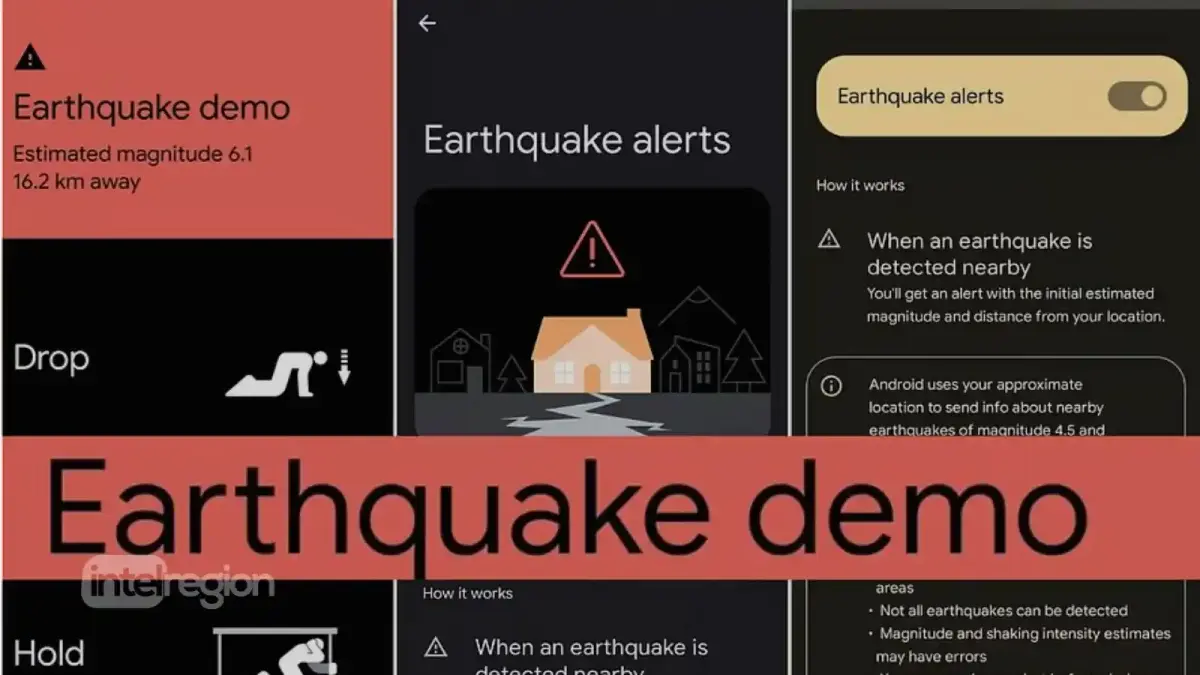
- Google has transformed billions of Android smartphones into one of the world’s largest earthquake detection networks, using built-in motion sensors to detect earthquakes within seconds and warn users before the strongest shaking arrives.

Imagine receiving a notification on your phone warning that an earthquake is about to strike—only to feel the ground begin to shake moments later.
It may sound like science fiction, but that is exactly what millions of Android users around the world experience through Google’s Earthquake Alerts System, an innovative technology that turns billions of smartphones into one of the world’s largest earthquake detection networks.
Unlike traditional warning systems that depend solely on expensive scientific monitoring stations, Google uses sensors already built into Android smartphones to detect earthquakes within seconds and alert people before the strongest shaking reaches them. Those few seconds of advance warning can give people enough time to move away from dangerous objects, stop a vehicle safely, take cover under sturdy furniture, or pause critical operations.
How Earthquake Early Warnings Work
Earthquakes release different types of seismic waves that travel through the Earth’s crust at different speeds.
The first waves to emerge from an earthquake’s epicentre are known as Primary Waves (P-waves). These waves travel at very high speeds but generally produce only mild vibrations that many people barely notice.
The more dangerous Secondary Waves (S-waves) and surface waves arrive shortly afterwards. These slower-moving waves are responsible for most of the destruction associated with earthquakes, including collapsed buildings, damaged infrastructure and serious injuries.
Because P-waves travel faster than the destructive waves, there is a brief window of opportunity to warn people before the strongest shaking begins. Depending on a person’s distance from the earthquake’s epicentre, that warning may range from less than a second to more than one minute.
For decades, earthquake early warning systems relied on underground seismic monitoring stations. While highly accurate, these stations are expensive to install and maintain, leaving many earthquake-prone regions without adequate coverage.
How Android Phones Detect Earthquakes
Google’s breakthrough came from recognising that nearly every Android smartphone already contains an accelerometer—a tiny motion sensor used for everyday functions such as screen rotation, step counting and fitness tracking.
When an Android phone is plugged in and resting on a stable surface such as a bedside table or desk, its accelerometer becomes sensitive enough to detect subtle ground movements caused by seismic activity.
A single phone cannot confirm an earthquake on its own. Someone could simply drop the device, slam a door nearby or place it on a vibrating appliance.
Instead, Google’s system looks for the same unusual vibration pattern being detected simultaneously by hundreds or even thousands of nearby Android devices.
When this happens, each participating phone anonymously sends a small amount of motion data along with its approximate location to Google’s servers.
Using advanced algorithms and machine learning, Google rapidly analyses the incoming reports to determine:
- The earthquake’s location
- Its estimated magnitude
- The direction the seismic waves are travelling
- Which communities are likely to experience shaking next
If the system confirms an earthquake, warnings are immediately sent to Android devices expected to be affected.
Why the Warning Arrives Before the Earthquake
At first glance, it may seem impossible for a smartphone to warn users about an earthquake that has already started.
The explanation lies in physics.
While seismic waves travel rapidly through the Earth’s crust, information sent through fibre-optic cables, satellites and mobile networks travels at nearly the speed of light.
For example, if an earthquake begins about 100 kilometres away, Android phones near the epicentre can detect the initial P-waves almost immediately. Google’s servers then analyse the data, verify the earthquake and send alerts to users farther away before the slower, more destructive waves reach them.
Although the warning may only last a few seconds, emergency experts say those seconds can significantly reduce injuries and save lives.
Google’s Two Types of Earthquake Alerts
Google issues two different types of notifications depending on the severity of the expected shaking.
Be Aware Alerts
These notifications are sent when only mild shaking is expected. They appear like ordinary notifications and provide information about the earthquake while advising users to stay alert.
Take Action Alerts
When stronger shaking is predicted, Android overrides many of the phone’s settings to display a full-screen emergency alert accompanied by a loud alarm.
The alert is designed to wake sleeping users and immediately instruct them to “Drop, Cover, and Hold On,” the internationally recognised safety procedure during an earthquake.
How Google Prevents False Alarms
One of the biggest challenges in earthquake detection is avoiding false alerts.
A single smartphone cannot distinguish between an earthquake and everyday movement.
To overcome this, Google relies on scale rather than individual devices.
Instead of trusting one phone, the system compares data from hundreds or thousands of nearby Android phones within fractions of a second.
Machine learning models analyse several factors, including:
- Timing of the vibrations
- Frequency of the motion
- Geographic distribution of reporting devices
- Intensity of the movement
- Distance between participating phones
Only when these measurements closely match the characteristics of an actual earthquake does Google trigger public alerts, greatly reducing the likelihood of false warnings.
Which Android Phones Can Participate?
Not every Android phone automatically becomes part of the detection network.
For the feature to work, a device generally needs:
- Google Play Services installed
- Location services enabled
- Internet connectivity
- A built-in accelerometer
- Earthquake Alerts enabled in Android settings
Google says the motion data collected is processed with privacy protections and is limited to information necessary for identifying seismic activity rather than tracking users’ personal behaviour.
Does Apple Offer the Same Technology?
Apple has not introduced a worldwide earthquake detection network powered by millions of iPhones.
Instead, iPhone users receive earthquake warnings through official government emergency alert systems where available.
Countries including Japan, the United States, Mexico and Taiwan operate dedicated earthquake early warning networks using professional seismic monitoring stations. When those agencies issue alerts, Apple delivers them to iPhone users through Wireless Emergency Alerts (WEA), the Emergency Alert System (EAS) or similar regional emergency notification services supported by iOS.
Why Google’s System Is Different
Google’s innovation is not simply the warning itself but the detection network behind it.
Rather than relying entirely on specialised seismic stations, Google has transformed billions of Android smartphones into additional earthquake sensors spread across much of the world.
This allows earthquake detection to expand into regions with limited scientific infrastructure without requiring governments to install thousands of expensive monitoring stations.
In countries that already operate professional seismic networks, Google can also combine official monitoring data with reports from Android devices to improve the speed and accuracy of alerts.
The Android Earthquake Alerts System demonstrates how everyday consumer technology can contribute to public safety on an unprecedented scale.
A smartphone designed for communication, navigation and entertainment can also become part of a global scientific network capable of detecting earthquakes in near real time and providing people with valuable seconds to protect themselves before disaster strikes.






IPOB Embraces Hausa Nation and All Northern Ethnic Nationalities in Historic Solidarity Declaration for Universal Freedom
IPOB has declared solidarity with Hausa people and other ethnic nationalities in Northern Nigeria, calling for a peaceful...


Nnamdi Kanu’s Legal Team Raises Fresh Questions Over Omotosho’s Judgment in Part 3 Commentary
Onyedikachi Ifedi, Esq., has questioned the legal basis of Nnamdi Kanu’s conviction, alleging irregularities involving Count 7....


IPOB Denies Plans to Resume Monday Sit-at-Home, Rejects Alleged Police Intelligence Report
IPOB has dismissed a purported police intelligence report alleging plans to resume Monday sit-at-home enforcement in the South-East...


‘No Negotiations, Only Referendum’ — Kanu’s Message to American Veterans of Igbo Descent
IPOB leader Nnamdi Kanu has reaffirmed his demand for a referendum on Biafra's self-determination, insisting he will reject any political...


IPOB Condemns NYSC Abductions in Imo, Accuses Uzodinma of Political Conspiracy
IPOB has condemned the reported abduction and rescue of NYSC members in Imo State, denying involvement and accusing Governor Hope...


Ambrose Alli University Lecturer Dies in Hotel Room After Sexual Encounter With 21-Year-Old Woman
A senior lecturer at Ambrose Alli University, Ekpoma, Dr Matthew Uwuigbe, has died in a hotel room in Edo State...


Omotosho’s First Jurisdictional Failure — The Court Lacked Authority to Try Kanu
The Mazi Nnamdi Kanu Global Legal Consortium has alleged that the Federal High Court lacked jurisdiction to try Kanu on...


‘No Government Without a Country’: IPOB Rejects Self-Appointed Biafra Government Officers
Mazi Chris Nwaọgụ has reiterated IPOB’s demand for Nnamdi Kanu’s freedom and Biafra’s restoration, while calling for Kanu’s appeal to...


Sokoto Declaration: Emma Powerful Dismantles False Claims, Reaffirms Onyendu Mazi Nnamdi Okwu Kanu’s Referendum Position
Kanu’s camp has rejected claims that he did not approve or co-sign the Sokoto Declaration, while stressing that he does...


Kanu’s Unlawful Conviction, the Law That Was Already Dead, and the Shame That Is Waiting for Nigeria’s Judiciary
Christopher Chidera, Esq., has challenged the legal basis of Nnamdi Kanu’s conviction, arguing that the trial court relied on a...