
Politics
IPOB: 2027 Election Is No Substitute for a Referendum — Let the Peoples Decide
IPOB has called for a referendum to allow Nigerians and the country’s constituent peoples to decide the political arrangement under which they want to live.

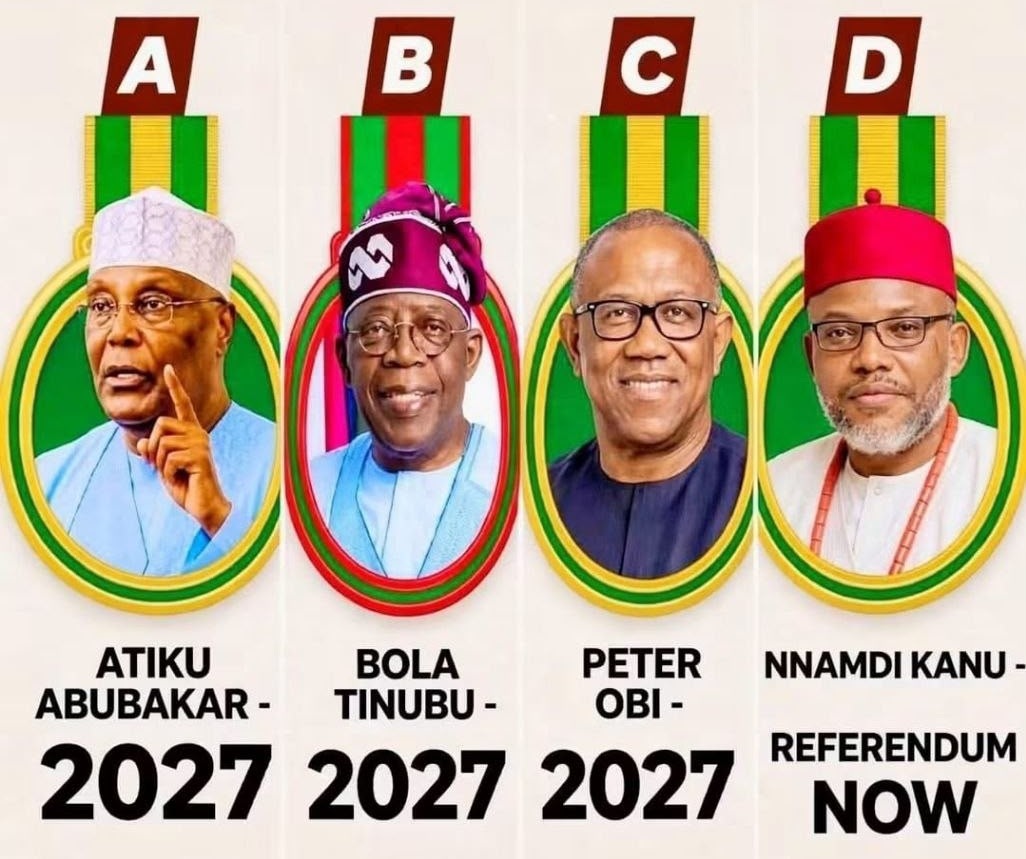
- IPOB has called for a referendum to allow Nigerians and the country’s constituent peoples to decide the political arrangement under which they want to live, arguing that elections alone cannot resolve Nigeria’s foundational political questions.

The Indigenous People of Biafra (IPOB) has called for a referendum to allow Nigerians and the country’s constituent peoples to determine the political arrangement under which they want to live.
IPOB spokesperson, Emma Powerful, made the call in a statement issued on Thursday, titled “IPOB: Stop the Endless Election Cycle — Let the People Choose Their Future.”
Powerful argued that the recurring electoral cycle has failed to address what IPOB describes as Nigeria’s foundational political questions.
According to him, the debate over the 2027 presidential election should go beyond choosing between political candidates, including Atiku Abubakar, Bola Ahmed Tinubu and Peter Obi.
“The deeper question is: who gave the constituent peoples of Nigeria the chance to decide whether they still want this political arrangement at all?”
IPOB said its leader, Nnamdi Kanu, and the organisation have consistently placed referendum and self-determination at the centre of their position.
The group said Nigerians should be given the opportunity to determine whether they want to remain together under a new constitution, adopt a federal or confederal structure, or pursue other constitutional arrangements.
IPOB Cites UK Self-Determination Debates
Powerful also compared Nigeria’s handling of self-determination demands with recent developments in the United Kingdom.
He referenced the September 14, 2026 meeting in Cardiff involving leaders of the Scottish National Party (SNP), Plaid Cymru and Sinn Féin, who signed a memorandum affirming the right of their respective nations to determine their constitutional futures through democratic means.
The memorandum called on the British government to prepare for and facilitate constitutional change in Scotland, Wales and Northern Ireland.
IPOB also referred to a symbolic referendum held in Piddington, Oxfordshire, where residents voted 285 to 26 in favour of leaving the United Kingdom. The vote, held in protest against plans to accommodate asylum seekers nearby, had no legal force.
Powerful questioned why, in IPOB’s view, similar demands for a peaceful referendum in Nigeria should be treated differently.
“If referendum can settle constitutional questions in Britain, why should the peoples of Nigeria be permanently denied the same opportunity?” the statement asked.
‘Elections Are Not Self-Determination’
IPOB distinguished between elections and referendums, arguing that elections determine who governs while referendums can address the constitutional structure within which people are governed.
“Endless presidential elections cannot, by themselves, resolve Nigeria’s foundational political questions,” the group said.
IPOB References Obasanjo and Jonathan
The organisation also cited previous comments attributed to former Presidents Olusegun Obasanjo and Goodluck Jonathan concerning Nigeria’s political and nation-building challenges.
IPOB referenced Obasanjo’s reported remarks at the Goodluck Jonathan Foundation Democracy Dialogue in Bauchi on August 11, 2026, where he questioned whether Western liberal democracy, as adopted in Africa, had adequately served the continent.
The group also cited Jonathan’s 2023 comments concerning Nigeria’s failure to fully integrate as a nation following the 1914 amalgamation.
IPOB said the comments demonstrated that concerns about Nigeria’s political structure extend beyond its own organisation.
IPOB Demands Referendum
The group maintained that a referendum would not predetermine the outcome of Nigeria’s constitutional future.
It said such a process would instead give citizens the opportunity to decide whether to remain together under a different political arrangement or pursue other constitutional options.
“For Biafrans, Biafrans must decide the future of Biafra,” Powerful said.
IPOB concluded by calling on Nigerians to focus on what it described as the people’s right to determine the country’s political future rather than allowing the 2027 election to substitute for a broader constitutional debate.
The statement was signed by Comrade Emma Powerful, Spokesperson/Media and Publicity Secretary of IPOB.





IPOB: 2027 Election Is No Substitute for a Referendum — Let the Peoples Decide
IPOB has called for a referendum to allow Nigerians and the country’s constituent peoples to decide the political arrangement under...

Sanwo-Olu, Fashola, Ambode, Others Named in Lagos APC 2027 Campaign Council (Full List)
The Lagos State chapter of the APC has unveiled its campaign council ahead of the 2027 general elections, naming Governor...

South African Woman Jailed 25 Years for Smuggling 5.75kg Heroin Into Nigeria
A Federal High Court in Abuja has sentenced 38-year-old South African woman Will Ann to 25 years in prison after...


NAFDAC Threatens to Shut Bakeries Over Banned Bread Improvers
NAFDAC has warned bakers in Niger State against using banned substances, including potassium bromate and saccharin, in bread production.


Meet Chelsea’s new owners, Clearlake Capital
Chelsea have entered a new ownership era after American investment firm Clearlake Capital acquired the stakes of Todd Boehly and...

JAMB Explains ‘Not Admitted’, ‘Admission in Progress’ and ‘Admitted’ Statuses
JAMB has explained what “Not Admitted,” “Admission in Progress” and “Admitted” mean on candidates’ CAPS, advising applicants to keep checking...

Peter Obi Advises Nigerians on Dangote Refinery IPO
Former Anambra State governor Peter Obi has urged Nigerians at home and abroad to consider investing in the ongoing Dangote...

14 Days to Keep Him in Custody, Endless Silence to Hear Him: How Nigeria’s Court of Appeal Built a Cage — Then Locked the Courtroom Door
A lawyer, Onyedikachi Ifedi, has challenged the legal basis of Nnamdi Kanu’s conviction, alleging reliance on a repealed law and...

Atiku Reveals What He Discussed With Aisha Buhari During Abuja Meeting
Former First Lady Aisha Buhari has visited former Vice-President and African Democratic Congress (ADC) presidential candidate Atiku Abubakar in Abuja.

Anambra Government Releases Peter Obi’s Debt Records, Puts Outstanding Loans at N127.4bn
The Anambra Government says eight external loans contracted during Peter Obi’s tenure as governor had an outstanding balance of N127.4...