
Politics
Tinubu’s Plans for Nigerians Inside the Fresh $2.42bn World Bank Loan
The Federal Government has unveiled a fresh $2.42 billion World Bank loan to fund…

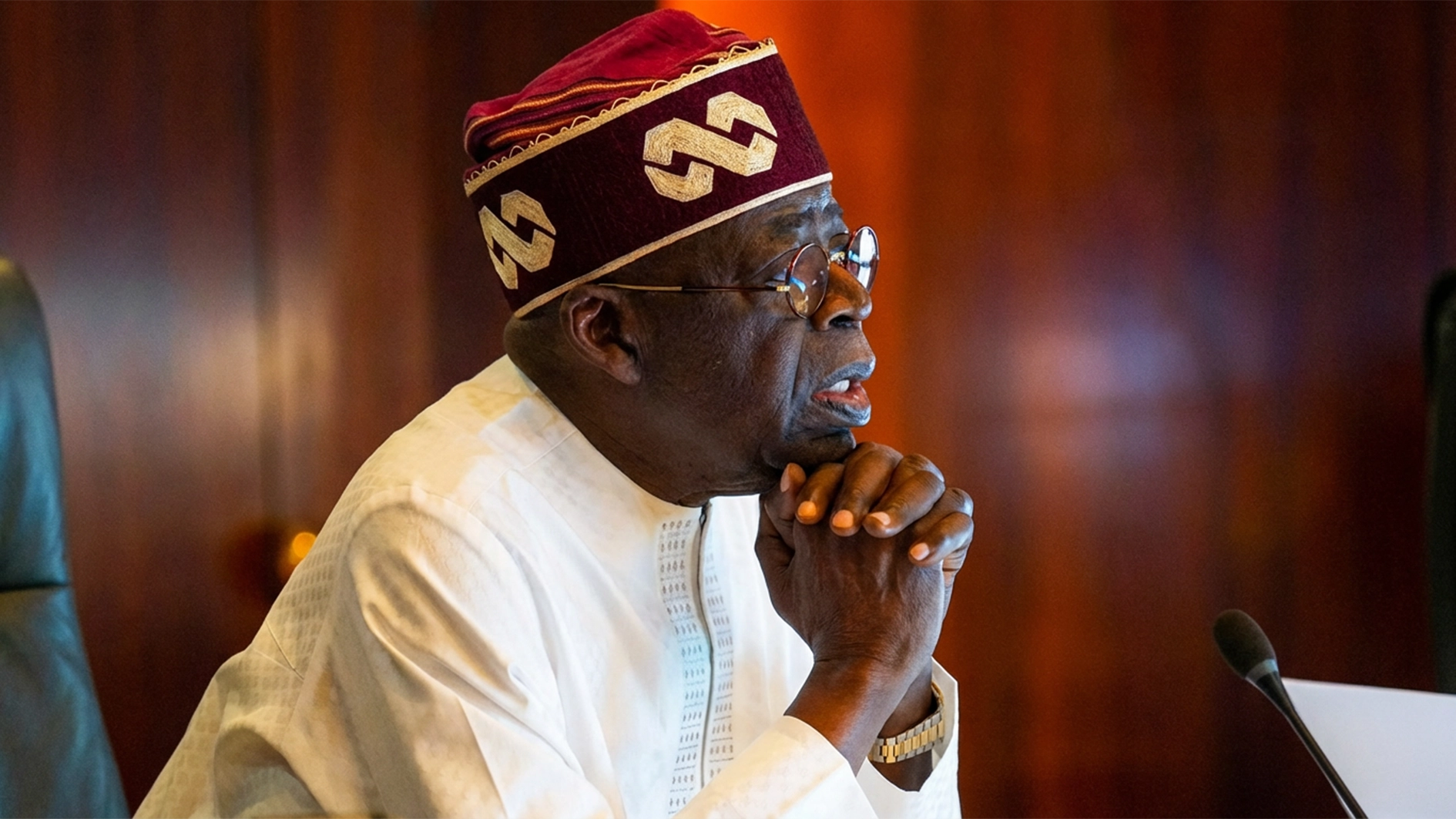
- The Federal Government has unveiled a fresh $2.42 billion World Bank loan to fund healthcare, education, food security, governance and support for vulnerable Nigerians as President Bola Tinubu seeks to cushion the impact of ongoing economic reforms.

The administration of President Bola Tinubu has unveiled a fresh $2.42 billion World Bank-backed intervention programme aimed at improving healthcare, education, food security, governance and social welfare across Nigeria.
The programmes, launched at the State House in Abuja, form part of the Federal Government’s strategy to cushion the impact of ongoing economic reforms while expanding support for vulnerable households and strengthening public services.
The funding package includes support for livelihood programmes, internally displaced persons, primary healthcare, education and governance reforms.
According to the Minister of State for Budget and Economic Planning, Dr. Doris Uzoka-Anite, the new financing totals about $2.42 billion, comprising:
- $500 million additional financing for the Nigeria Community Action for Resilience and Economic Stimulus (NG-CARES) programme.
- $300 million for the Solutions for the Internally Displaced and Host Communities (SOLID) project.
- $500 million for HOPE-Governance.
- $570 million for HOPE-Primary Healthcare.
- About $552 million for HOPE-Education, including support from the Global Partnership for Education.
President Tinubu said the programmes are designed to ensure that the gains from his administration’s economic reforms are reflected in the daily lives of Nigerians.
Represented by the Minister of Finance and Coordinating Minister of the Economy, Wale Edun, the President acknowledged that although the reforms are beginning to deliver positive economic results, ordinary Nigerians must also experience tangible improvements.
“Positive results are emerging from our reforms. Robust growth is returning. Confidence is rising. But that progress must be felt in every household, not just in national statistics,” Tinubu said.
He described the programmes as key tools for transforming economic reforms into improved livelihoods, better healthcare, quality education and stronger social protection.
FG Says More Funding Needed
Minister of Budget and Economic Planning, Abubakar Bagudu, admitted that while the removal of fuel subsidies and other reforms had freed up government resources, they remain insufficient to address Nigeria’s growing social challenges.
According to him, this explains the need for continued support from the World Bank and other development finance institutions.
What the Programmes Will Fund
The expanded NG-CARES programme will provide livelihood support, food security interventions and grants to vulnerable households, farmers and small businesses.
The HOPE initiative will focus on improving governance, strengthening primary healthcare services and expanding access to quality education.
Meanwhile, the SOLID programme is expected to improve infrastructure, healthcare, schools, water supply and economic opportunities for internally displaced persons and their host communities, particularly in northern Nigeria.
The Federal Government said the programmes are structured around measurable performance targets, meaning states and implementing agencies must meet agreed benchmarks before receiving additional funding.
Education and Healthcare
Minister of Education, Dr. Maruf Alausa, disclosed that the HOPE-Education programme will benefit nearly 30 million children, support more than 500,000 teachers, and improve thousands of public schools and non-formal learning centres across Nigeria.
Similarly, Coordinating Minister of Health and Social Welfare, Prof. Muhammad Ali Pate, said more than 3,000 primary healthcare centres have already been revitalised, while another 1,900 facilities are expected to be completed.
According to him, the reforms have also led to the retraining of over 78,000 health workers and increased patient visits to primary healthcare centres.
Nigeria’s Rising Debt
The announcement comes as Nigeria continues to rely heavily on concessional loans from the World Bank to finance critical development projects.
According to data from the Debt Management Office (DMO), Nigeria’s total public debt stood at ₦159.28 trillion as of December 2025.
The country’s debt to the World Bank also increased to approximately $19.89 billion, making the institution one of Nigeria’s largest external creditors.
Despite concerns over rising debt, the Federal Government insists the loans are intended to build long-term institutions, improve public services and reduce poverty.
The World Bank has also maintained that the success of the programmes will depend on transparency, accountability and effective implementation by federal and state governments.
If successfully executed, the initiatives are expected to improve access to healthcare, education, food security and social protection for millions of Nigerians while helping cushion the economic impact of ongoing reforms.





BREAKING: Nollywood Actor Francis Duru is Dead, Family Release Statement, Shares Cause of Death
Francis Duru’s family has confirmed his death following a brief illness, as colleagues and fans mourn the veteran Nollywood actor.

One Law for Abba Kyari, No Law for Nnamdi Kanu: Omotosho’s Fourth Jurisdictional Collapse
In Mazi Nnamdi Kanu’s Case, where Kenya was the territorial state, Kenyan sovereignty, comity, and statutory double criminality were utterly...

Ebola in Nigeria: How to Protect Yourself, Symptoms to Watch and Where to Get Help
Following the confirmation of an Ebola case in Abuja, here is essential safety advice for Nigerians, healthcare workers and travellers,...

Ebola: WHO Advises Against Travel, Trade Restrictions After Nigeria Confirms Case
WHO has advised against travel and trade restrictions on Ebola-affected countries as Nigeria monitors 44 contacts following an imported case...

Ebola: Five Things to Know About Bundibugyo Virus as Nigeria Confirms First Case
Nigeria has confirmed an imported Bundibugyo Ebola case in Abuja. Here are five key facts about its symptoms, transmission, treatment...

Italy Rejects 2,220 Nigerians Seeking Asylum
Italy rejected 2,220 Nigerian asylum claims in first-instance decisions in 2025, while 1,175 Nigerians received protection and 4,120 cases remained...

Dangote Buys 25% Stake in Kenya Pipeline Network, Plans $50bn Expansion
Aliko Dangote says his Group has acquired a stake in Kenya’s petroleum pipeline network as it expands fuel distribution infrastructure...

28-Year-Old POS Operator Sentenced to Death by Hanging Over Role in Kidnap Gang
An Imo court has sentenced a 28-year-old POS operator to death over his involvement in the abduction and murder of...


UTME: JAMB Considers Life Skills, Critical Thinking Tests for Admission Seekers
JAMB is considering adding life skills and critical thinking to the UTME, while introducing procedures to help candidates resolve discrepancies...

AAC Writes Tinubu, Demands Aso Rock, Food and Logistics for 5,000 Supporters at Sowore’s Inauguration
The AAC has requested permission to inaugurate Sowore’s presidential campaign council at Aso Rock, asking the Presidency to provide refreshments...