
News
US Lawmakers Set Date For Hearing On Christian Persecution In Nigeria
US lawmakers will examine alleged Christian persecution in Nigeria at a November 12 hearing focused on Middle Belt insecurity and the government’s response.

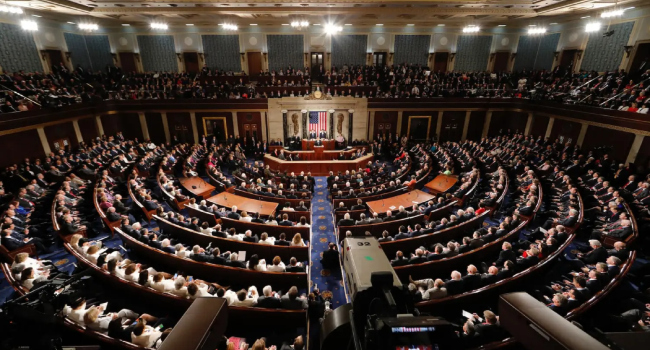
- US lawmakers will examine alleged Christian persecution in Nigeria at a November 12 hearing focused on Middle Belt insecurity and the government’s response.

The United States House of Representatives has scheduled a hearing for November 12, 2026, to examine alleged Christian persecution in Nigeria and assess efforts to tackle insecurity in the Middle Belt.
The hearing will be chaired by Republican Representative Chris Smith, chairman of the House Foreign Affairs Subcommittee on Africa.
According to a statement issued by Smith’s office on Monday, lawmakers will review the Nigerian government’s efforts to protect vulnerable communities, prevent religious violence and bring perpetrators to justice.
The session is titled ‘One Year Later: Assessing Nigeria’s Efforts to Protect Christians and Secure the Middle Belt’.
Hearing to assess Nigeria’s security response
The subcommittee will examine measures taken against religious persecution and attacks by extremist groups, including Boko Haram.
Lawmakers will also consider possible US policy responses aimed at encouraging Nigerian authorities to prevent violence against Christian and Muslim communities.
The hearing is expected to be Smith’s 14th congressional session addressing alleged persecution of Christians in Nigeria.
Smith, who represents New Jersey, has been among US lawmakers who have repeatedly raised concerns about attacks on Christian communities and described the violence as genocide.
US officials and religious freedom advocates to testify
The hearing will feature two panels.
The first will comprise Frank Garcia, assistant secretary of state for African affairs, and Riley Barnes, assistant secretary of state for democracy, human rights and labour.
The second panel will include:
- Nina Shea, senior fellow and director of the Centre for Religious Freedom at the Hudson Institute.
- Ryan Brown, chief executive officer of Open Doors US.
- Oge Onubogu, director and senior fellow of the Africa Programme at the Centre for Strategic and International Studies.
Other members of the House Foreign Affairs Subcommittee on Africa are expected to participate.
The session is scheduled to begin at 11am in Washington, DC, at the Rayburn House Office Building, with a live stream available on YouTube.
Hearing follows Nigeria’s religious freedom designation
The planned session comes about a year after President Donald Trump redesignated Nigeria as a Country of Particular Concern over alleged severe violations of religious freedom.
Trump initially designated Nigeria in 2020. His successor, former President Joe Biden, subsequently removed the country from the list.
On October 31, 2025, Trump restored the designation, citing attacks against Christians and alleging that radical Islamist groups had killed thousands.
The following month, the House Foreign Affairs Subcommittee on Africa scheduled an examination of the designation and the allegations behind it.
Trump previously threatened aid suspension and military action
On November 1, 2025, Trump threatened to suspend US assistance to Nigeria and raised the possibility of military intervention if the government failed to address the killings.
“If the Nigerian Government continues to allow the killing of Christians, the USA will immediately stop all aid and assistance to Nigeria, and may very well go into that now-disgraced country, ‘guns-a-blazing,’ to completely wipe out the Islamic terrorists who are committing these horrible atrocities.
“I am hereby instructing our Department of War to prepare for possible action. If we attack, it will be fast, vicious, and sweet, just like the terrorist thugs attack our cherished Christians,” Trump said on November 1, 2025.
Nigeria and the United States have since entered into a military partnership targeting terrorist groups operating in northern Nigeria.
The November 12 hearing is intended to assess Nigeria’s progress in protecting affected communities and examine what further action Washington could take.





Two Convicted Inmates Escape From Kogi Prison
Two inmates escape from Kogi prison as the Nigerian Correctional Service launches a search and orders an investigation into the...

US Lawmakers Set Date For Hearing On Christian Persecution In Nigeria
US lawmakers will examine alleged Christian persecution in Nigeria at a November 12 hearing focused on Middle Belt insecurity and...

WATCH: How Babcock Student Survives Suicide Attempt after Roommate’s Intervention
A Babcock student rescued by his roommates is alive and receiving treatment, the university has confirmed, dismissing reports that he...

FG’s ₦50,000 Relief Payment Divides Nigerians as Vote-Buying Allegations Intensify
The ₦50,000 relief payment has drawn praise from beneficiaries, while opposition parties question its timing and allege political motives ahead...


Manchester United Set to Sack Michael Carrick After Eight-Match Winless Run
Michael Carrick faces the sack as Manchester United review their poor start, with the club in the relegation zone after...

Nigeria’s FX Turnover Drops 51% as Dollar Trading Slows to $1.81bn
Nigeria’s FX turnover fell by 51.29% in the week ended November 6, while the naira recorded only a marginal movement...


Obasanjo Reveals Why He Rejected US Asylum Despite Warning of Arrest Under Abacha
Obasanjo reveals why he rejected US asylum despite warnings that Abacha’s government would arrest him, recounting his return to Nigeria...


Tinubu’s 2027 Manifesto: 78,000 Security Recruits, More Jobs and Lower Living Costs Promised
Tinubu’s 2027 manifesto proposes 78,000 additional security personnel, six per cent annual economic growth and expanded investment in housing, education...

2027: INEC Probes 54 Persons Across 10 States Over Voter Registration Irregularities
INEC has identified 54 persons across 10 states for investigation over voter registration irregularities, warning of possible prosecution as it...

BRITAIN TO BLAME: London’s Role in the Abduction and Extraordinary Rendition of Nnamdi Kanu
The Indigenous People of Biafra (IPOB) has blamed the British government for its alleged complicity in the abduction of its...