
News
WARNING: Fish Sellers Now Using Chemical Dye to Make Rotten Fish Look Fresh
Fresh fish sellers are allegedly using red industrial dye to make rotten fish appear fresh, raising serious health concerns.

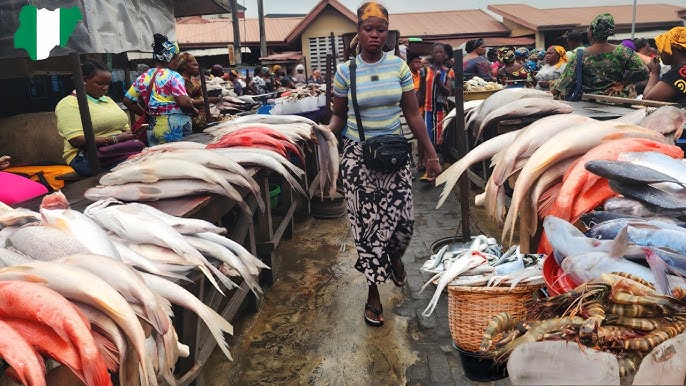
- Fresh fish sellers are allegedly using red industrial dye to make rotten fish appear fresh, raising serious health concerns.
- Experts warn the practice could expose consumers to toxic chemicals capable of causing food poisoning, kidney damage and other life-threatening complications.

Fresh fish sellers are allegedly resorting to a dangerous practice of applying red industrial chemical dyes to spoiled seafood to make it appear freshly caught, as rising economic hardship and the high cost of refrigeration continue to bite.
The deceptive method, reportedly becoming more common in some markets, involves brushing bright red industrial dye onto the dull or greyish gills of old or decaying fish to restore the appearance of freshness and attract unsuspecting buyers.
In a healthy fish, the gills are naturally bright red shortly after it is caught but gradually turn brown or grey as the fish begins to spoil. Because many consumers rely on the colour of the gills to determine freshness, dishonest traders are allegedly exploiting this knowledge to increase sales.
Health experts have warned that the practice could pose serious risks to consumers.
According to health practitioner, Dr. Hassan Abdullahi, industrial dyes are not meant for human consumption and may contain toxic chemicals and heavy metals capable of causing severe food poisoning, gastrointestinal complications, and long-term damage to vital organs such as the liver and kidneys.
Several Nigerians who spoke on the issue blamed worsening economic conditions and the soaring cost of electricity for encouraging the practice. They explained that many small-scale fish traders can no longer afford to keep unsold fish refrigerated overnight, forcing some to adopt fraudulent methods instead of discarding spoiled stock.
A caterer, Mrs. Josephine Audu, recounted buying what appeared to be fresh red snapper, only to discover at home that the fish had been artificially coloured.
“When I soaked it in water, the gills lost their colour completely and the water turned bright red. The fish smelled rotten underneath,” she said.
Another resident, Mrs. Sherifatu Kazeem, described the development as frightening, saying generations of Nigerians had been taught that bright red gills were a reliable sign of freshness.
Restaurant owner, Chef Mabel Ajede, advised consumers not to rely solely on the appearance of fish but to also check for smell, firmness and other signs of freshness.
She warned that if water turns red or pink after washing a fish, it should be discarded immediately as it may have been artificially coloured.
While condemning the alleged practice, trader Fatimetu Dirisu argued that poor infrastructure and expensive electricity have worsened food preservation challenges for market women. She called on the government to establish affordable solar-powered cold storage facilities in markets to reduce food waste and discourage desperate traders from engaging in dangerous practices.






Jehovah’s Witnesses Make Fresh Decision on Blood Transfusions
Jehovah’s Witnesses have announced a change concerning the four main components of blood.


BREAKING: FG Suspends 21 NSCDC Officers, Releases Full List
The Federal Government has suspended the Niger State Commandant of the NSCDC and 20 other officers following the deaths of...


FG Gives Fresh Update as 10-Member Panel Probes Deaths of 37 NSCDC Detainees
The Federal Government has constituted a 10-member independent committee to investigate the deaths of 37 suspected illegal miners...


Alex Otti Gives Fresh Update on Political Future, Says He Will Retire After Tenure
Abia State Governor Alex Otti has said he will retire from active politics after completing his tenure, ruling out a...


BREAKING: FG Plans Low-Key 66th Independence Celebration for Nigerians
President Bola Tinubu will address Nigerians in a nationwide broadcast on October 1 as the Federal Government prepares a low-key...


BREAKING: Youths Seeks Release of #EndSARS Report
Ogun youths have urged Governor Dapo Abiodun to make public the report of the state’s Judicial Panel of Investigation on...


Meet the 3 New Super Eagles Stars Set for Their First Nigeria Call-Up
George Ilenikhena, Isaac James and Moses Usor have earned their first Super Eagles invitations as Nigeria prepare for crucial 2026...


BREAKING: Tinubu Gives Fresh Order Over Deaths of 37 Miners
President Bola Tinubu has ordered a full and transparent investigation into the deaths of 37 miners in NSCDC custody in...


Burna Boy Set to Make History Again as He Headlines NFL’s First-Ever Paris Game
Nigerian Afrobeats superstar Burna Boy will return to Paris’ Stade de France in October to headline the halftime show for...


Dangote Refinery Reveals Why Falling Crude Prices May Not Hurt Its Profits
Dangote Refinery has assured prospective investors that a possible decline in crude oil prices after the US-Iran conflict will not...