
News
BREAKING: Seven Boko Haram, ISWAP Commanders Arrested at Katsina Airport After Hajj Trip
Interior Minister Olubunmi Tunji-Ojo has disclosed that seven suspected Boko Haram and ISWAP commanders were arrested at Katsina airport while returning from Hajj…

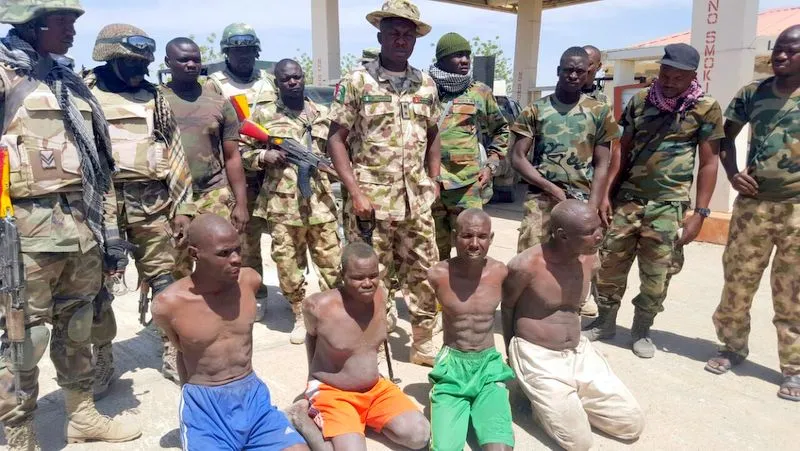
- Interior Minister Olubunmi Tunji-Ojo has disclosed that seven suspected Boko Haram and ISWAP commanders were arrested at Katsina airport while returning from Hajj.

Minister of Interior, Dr. Olubunmi Tunji-Ojo, has revealed that seven suspected commanders of Boko Haram and the Islamic State West Africa Province (ISWAP) were recently arrested at the Katsina airport while returning from the Hajj pilgrimage in Saudi Arabia.
According to the minister, the suspects were intercepted last Thursday through Nigeria’s integrated identity management system and were immediately handed over to the Department of State Services (DSS).
Tunji-Ojo made the disclosure at the State House in Abuja after President Bola Tinubu signed the 2026 National Identity Management Commission (NIMC) Act into law.
He said the arrests demonstrate the success of the government’s ongoing reforms in identity management, border security and intelligence sharing.
The minister explained that the Tinubu administration inherited a fragmented identity system, where key government databases operated independently, making it difficult to track criminals and security threats.
However, he said recent reforms have integrated the National Identity Number (NIN) database with immigration and international security systems, including Interpol.
“Even last week, Thursday, seven of the known commanders of Boko Haram and ISWAP, at the point of coming back from Mecca, were arrested in Katsina at the airport and handed over to the DSS,” Tunji-Ojo said.
He added that the new NIMC Act will further strengthen the country’s security architecture, improve identity verification and enhance Nigeria’s ability to combat terrorism, financial crimes and identity theft.
President Tinubu described the new law as a major milestone in modernising Nigeria’s identity management system and deepening the country’s digital transformation.





Delta Commissioner, Three Others Arrested Over Deputy Director’s Death
Five suspects are now in custody, while police have declared two others wanted as investigations into the ministry official’s death...

Kanu Family Fires Back: ‘No Statutory Transition Means No Valid Sentence’
The Okwu-Kanu Family has called for the immediate hearing of Nnamdi Kanu’s appeal, questioning the written law underpinning his conviction...


IPOB Accuses Nigerian Judiciary of ‘Judicial Banditry’ Over Nnamdi Kanu Conviction
IPOB has accused the Nigerian judiciary of violating constitutional provisions in Nnamdi Kanu’s conviction, questioning the legal basis of the...

IPOB: Nnamdi Kanu Must Be Released Unconditionally, Appeal Must Be Listed — Chris Nwaọgụ
IPOB has renewed its demand for the immediate and unconditional release of Nnamdi Kanu, while calling for his pending appeal...
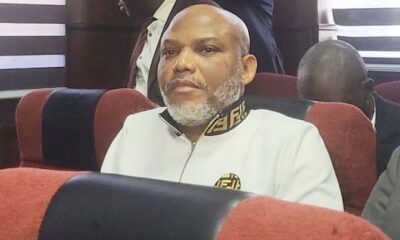

‘Show Me the Law’ Is Not a Joke — It Is Section 36, Section 122, and the Supreme Court, Spoken from the Dock
Ifedi argues that Kanu’s conviction relied on a repealed terrorism law, raising fundamental constitutional questions about its validity.
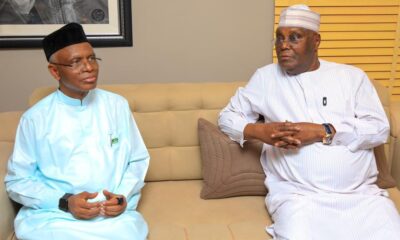

BREAKING: Atiku Appoints El-Rufai, Hayatu-Deen in ADC Presidential Campaign Council
Atiku Abubakar has announced the appointment of Nasir el-Rufai and Mohammed Hayatu-Deen to key positions in his African Democratic Congress,...

NECO Releases 2026 SSCE Results, Records Drop in Examination Malpractice
NECO has released the 2026 SSCE results, with 1,496 candidates recorded for examination malpractice, representing a 64.74% decrease from 2025.


PHOTOS: Anthony Joshua Endures ‘Torture’ Training Ahead of Fury Fight
Anthony Joshua has stepped up his preparations for a potential Tyson Fury showdown with an unusual stretching machine that has...


Umahi Orders Tinubu’s Pictures on First Niger Bridge
Works Minister David Umahi has ordered that President Bola Tinubu’s pictures be displayed on the First Niger Bridge after its...
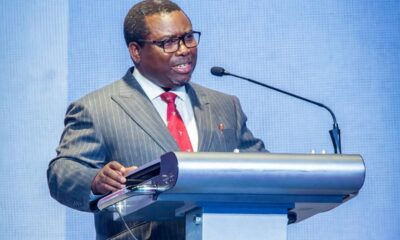

INEC to Deploy Intelligence Against Vote Buying Ahead of 2027 Elections
INEC Chairman Joash Amupitan says the commission will activate intelligence operations and pursue a joint task force to tackle vote...