
News
BREAKING: US Slaps 12.5% Tariff on Nigerian Imports
The United States has imposed a 12.5% tariff on imports from Nigeria, accusing the country of failing to effectively prohibit goods produced with forced labour.

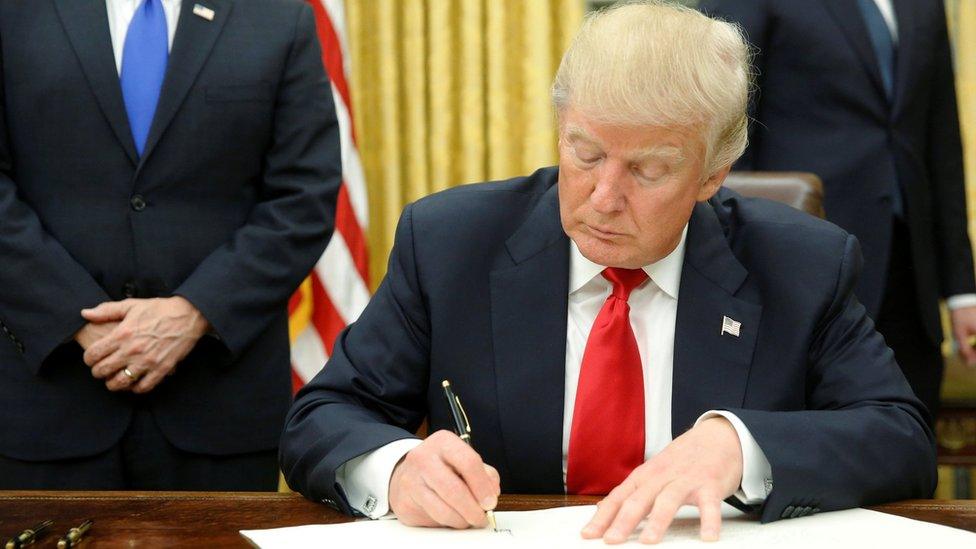
- The United States has imposed a 12.5% tariff on imports from Nigeria, accusing the country of failing to effectively prohibit goods produced with forced labour.
- The new trade measure is part of a wider policy affecting 60 economies and could impact Nigerian exports to the U.S.

The United States government has imposed a 12.5 per cent tariff on imports from Nigeria, citing the country’s alleged failure to effectively prohibit the importation of goods produced through forced labour.
The new tariff is part of a broader trade policy targeting 60 economies that Washington says have not adopted or effectively enforced laws banning goods linked to forced labour.
The measure was announced on Thursday by the Office of the United States Trade Representative (USTR) and follows months of investigations into the trade practices of some of America’s largest trading partners.
Under the new policy, Nigerian products exported to the United States will attract an additional 12.5 per cent tariff, except for products specifically listed under exemptions contained in the U.S. government’s official notice.
Why Nigeria Was Hit With the Tariff
According to the USTR, the tariffs were introduced after investigations found that several countries, including Nigeria, had not taken sufficient steps to prohibit the importation of goods produced with forced labour.
The agency said the investigation was conducted under Section 301 of the U.S. Trade Act, a law that allows the United States to take action against foreign trade practices considered unfair or harmful to American commerce.
The investigation began in May 2026 and covered 60 of the United States’ largest trading partners.
During the review process, the USTR disclosed that it received more than 1,600 written submissions, heard testimony from over 100 witnesses during public hearings, and consulted with representatives from more than 45 governments before arriving at its final decision.
Some Countries Get Lower Tariffs
While Nigeria and several other countries were subjected to a 12.5 per cent tariff, the U.S. granted a lower 10 per cent tariff to countries that have either already implemented or formally committed to implementing bans on imports linked to forced labour.
These countries include:
- India
- Indonesia
- Malaysia
- Mexico
- United Kingdom
- Canada
- Pakistan
- Bangladesh
- Argentina
- Cambodia
- Ecuador
- El Salvador
- Guatemala
- Honduras
- Jordan
- Sri Lanka
- Trinidad and Tobago
According to the USTR, these countries qualified for the lower tariff because they had taken concrete steps to address forced labour concerns.
The agency stated:
“10 percent is the appropriate rate of Section 301 duties for investigated economies that impose a forced labour import prohibition, have committed to impose and enforce such a prohibition through an Agreement on Reciprocal Trade, or have implemented a partial regime preventing the importation of certain forced labour goods.”
The USTR added that all remaining investigated economies, including Nigeria, would face the 12.5 per cent tariff.
Official U.S. Position on Nigeria
In a Federal Register notice released alongside the announcement, the USTR explained that the decision followed a review of public comments, testimony presented during the investigation, recommendations from the Section 301 Committee and advice from several advisory bodies.
The notice stated that the tariff would apply to Nigerian products unless they fall under specific exemptions listed in the official document.
It said:
“Based on the findings in the investigation of Nigeria, considering the public comments, testimony, and the advice of the Section 301 Committee, as well as the advice of advisory committees, and in accordance with the specific direction of the President, the Trade Representative has determined to impose 12.5 percent tariffs on products of Nigeria, except as provided in Annex I and Annex II.”
The USTR added that the tariffs were considered appropriate to encourage the elimination of the trade practices identified during the investigation.
Trump Administration Explains Decision
The latest action follows a recent decision by U.S. President Donald Trump to invoke Section 122 of the Trade Act of 1974, allowing his administration to introduce temporary tariffs on imports after the U.S. Supreme Court blocked an earlier, broader tariff plan introduced under the International Emergency Economic Powers Act (IEEPA).
Explaining the latest move, United States Trade Representative Jamieson Greer said the policy was intended to pressure America’s trading partners into strengthening their efforts against forced labour.
According to Greer, decades of diplomatic engagement had failed to eliminate forced labour from global supply chains.
“President Trump recognises that decades of moral suasion have not eradicated forced labour from global supply chains.
“The United States has had a forced labour import ban for nearly a century. It’s well past time for our trading partners to do the same.”
Products Exempted From the Tariff
Despite the new trade restrictions, the USTR clarified that not every Nigerian product would automatically be affected.
According to the agency, exemptions have been granted for certain categories of goods, including:
- Raw materials whose restriction could create supply shortages in the United States.
- Products whose tariffs could trigger major disruptions to the U.S. economy.
- Goods that are not readily available in sufficient quantities within the United States or from alternative suppliers.
- Certain products imported from countries that have already implemented or committed to implementing forced labour import bans.
- Other products where imposing tariffs is considered unlikely to eliminate the trade practices under investigation.
Potential Impact on Nigeria
The new tariff could increase the cost of Nigerian goods entering the U.S. market, potentially making them less competitive compared to products from countries facing lower tariff rates.
Exporters of agricultural products, manufactured goods and other non-oil exports may experience reduced demand if American importers shift to suppliers from countries with lower trade barriers.
The development also comes as Nigeria continues efforts to expand non-oil exports and strengthen trade relations with major global markets.
Although the United States has not announced a blanket ban on Nigerian goods, the additional tariff represents another hurdle for exporters seeking to access one of the world’s largest consumer markets.
The Federal Government has yet to issue an official response to the latest U.S. trade measure.





BREAKING: Nollywood Actor Francis Duru is Dead, Family Release Statement, Shares Cause of Death
Francis Duru’s family has confirmed his death following a brief illness, as colleagues and fans mourn the veteran Nollywood actor.

One Law for Abba Kyari, No Law for Nnamdi Kanu: Omotosho’s Fourth Jurisdictional Collapse
In Mazi Nnamdi Kanu’s Case, where Kenya was the territorial state, Kenyan sovereignty, comity, and statutory double criminality were utterly...

Ebola in Nigeria: How to Protect Yourself, Symptoms to Watch and Where to Get Help
Following the confirmation of an Ebola case in Abuja, here is essential safety advice for Nigerians, healthcare workers and travellers,...

Ebola: WHO Advises Against Travel, Trade Restrictions After Nigeria Confirms Case
WHO has advised against travel and trade restrictions on Ebola-affected countries as Nigeria monitors 44 contacts following an imported case...


Ebola: Five Things to Know About Bundibugyo Virus as Nigeria Confirms First Case
Nigeria has confirmed an imported Bundibugyo Ebola case in Abuja. Here are five key facts about its symptoms, transmission, treatment...

Italy Rejects 2,220 Nigerians Seeking Asylum
Italy rejected 2,220 Nigerian asylum claims in first-instance decisions in 2025, while 1,175 Nigerians received protection and 4,120 cases remained...

Dangote Buys 25% Stake in Kenya Pipeline Network, Plans $50bn Expansion
Aliko Dangote says his Group has acquired a stake in Kenya’s petroleum pipeline network as it expands fuel distribution infrastructure...

28-Year-Old POS Operator Sentenced to Death by Hanging Over Role in Kidnap Gang
An Imo court has sentenced a 28-year-old POS operator to death over his involvement in the abduction and murder of...


UTME: JAMB Considers Life Skills, Critical Thinking Tests for Admission Seekers
JAMB is considering adding life skills and critical thinking to the UTME, while introducing procedures to help candidates resolve discrepancies...

AAC Writes Tinubu, Demands Aso Rock, Food and Logistics for 5,000 Supporters at Sowore’s Inauguration
The AAC has requested permission to inaugurate Sowore’s presidential campaign council at Aso Rock, asking the Presidency to provide refreshments...