
Business
Dangote Buys 25% Stake in Kenya Pipeline Network, Plans $50bn Expansion
Aliko Dangote says his Group has acquired a stake in Kenya’s petroleum pipeline network as it expands fuel distribution infrastructure across Africa and pursues a proposed refinery in Lamu.


- Aliko Dangote says his Group has acquired a stake in Kenya’s petroleum pipeline network as it expands fuel distribution infrastructure across Africa and pursues a proposed refinery in Lamu.

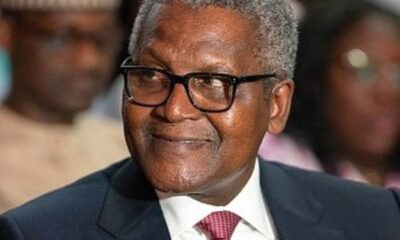
President of Dangote Industries Limited, Aliko Dangote, has announced the acquisition of a 25 per cent stake in a petroleum products pipeline network in Kenya, strengthening the Group’s push to expand fuel distribution across Africa.
Dangote disclosed the investment during a conversation with Financial Times Africa Editor David Pilling at the Financial Times Africa Summit 2026 in London.
“Just let me tell you, yesterday, with the support from the President of Kenya, we bought 25 per cent of the pipeline network for the distribution of petroleum products,” he said.
The industrialist said the Group was also pursuing distribution projects in Djibouti, Ethiopia, Cameroon and Namibia to improve the storage and movement of refined petroleum products.
“We are very aggressive with that,” Dangote said when asked about investments in depots, pipelines and related infrastructure.
He explained that the Group was developing a corridor connecting Djibouti with Addis Ababa, Ethiopia’s capital, with tank farms to support petroleum storage and distribution.
A separate project in Cameroon was nearing finalisation, he said, while Namibia had been identified as a gateway into Southern African markets.
“From our refinery to Namibia is just about four days of steaming.”
According to Dangote, the proposed supply route would move refined products from Lagos to Namibia for onward distribution to markets including Botswana and South Africa.
He also outlined plans for a corridor extending through Zimbabwe and Zambia, supported by strategically located storage and transport facilities.
The distribution investments accompany the Group’s proposal to build a refinery in Lamu, Kenya, with a capacity of approximately 700,000 barrels per day.
Dangote said East Africa’s industrial and mining activities, rising energy demand and difficulties accessing diesel and other fuels informed the proposed investment.
He explained that the refinery would obtain crude oil from multiple markets rather than rely solely on supplies from Uganda or Kenya.
Lamu was selected following technical assessments of potential sites, with deep-water access, marine facilities and adequate water resources among the deciding factors.
Dangote said the investment decision was reached within four months. He also alleged that vested commercial interests had attempted to obstruct the project through legal proceedings shortly before its public unveiling.
Beyond petroleum infrastructure, he urged African governments to protect domestic manufacturers against unfair foreign competition.
He argued that allowing imports to displace local production amounted to “exporting our jobs out of the continent, importing poverty into the continent.”
Dangote disclosed that the Group had budgeted approximately $50 billion for investments between 2026 and 2030, with the aim of expanding its operations and encouraging other investors to support African industrial development.
“The legacy we are trying to set up is how do we industrialise our continent?” he said.
He identified unreliable electricity as a major barrier to manufacturing and mineral processing, saying inadequate power prevented many African countries from adding value to their resources before export.
According to him, approximately 650 million Africans lack electricity access. He said addressing that deficit would create opportunities for manufacturing, employment and economic diversification.
Dangote maintained that Africa’s agricultural land, mineral wealth and youthful population provided the foundations for substantial industrial growth.






Ebola in Nigeria: How to Protect Yourself, Symptoms to Watch and Where to Get Help
Following the confirmation of an Ebola case in Abuja, here is essential safety advice for Nigerians, healthcare workers and travellers,...

Ebola: WHO Advises Against Travel, Trade Restrictions After Nigeria Confirms Case
WHO has advised against travel and trade restrictions on Ebola-affected countries as Nigeria monitors 44 contacts following an imported case...


Ebola: Five Things to Know About Bundibugyo Virus as Nigeria Confirms First Case
Nigeria has confirmed an imported Bundibugyo Ebola case in Abuja. Here are five key facts about its symptoms, transmission, treatment...

Italy Rejects 2,220 Nigerians Seeking Asylum
Italy rejected 2,220 Nigerian asylum claims in first-instance decisions in 2025, while 1,175 Nigerians received protection and 4,120 cases remained...

Dangote Buys 25% Stake in Kenya Pipeline Network, Plans $50bn Expansion
Aliko Dangote says his Group has acquired a stake in Kenya’s petroleum pipeline network as it expands fuel distribution infrastructure...

28-Year-Old POS Operator Sentenced to Death by Hanging Over Role in Kidnap Gang
An Imo court has sentenced a 28-year-old POS operator to death over his involvement in the abduction and murder of...


UTME: JAMB Considers Life Skills, Critical Thinking Tests for Admission Seekers
JAMB is considering adding life skills and critical thinking to the UTME, while introducing procedures to help candidates resolve discrepancies...

AAC Writes Tinubu, Demands Aso Rock, Food and Logistics for 5,000 Supporters at Sowore’s Inauguration
The AAC has requested permission to inaugurate Sowore’s presidential campaign council at Aso Rock, asking the Presidency to provide refreshments...


Jurisprudential Collapse & Judicial Fear” The Jurisprudential Collapse in FRN v. Kanu: Why the Judiciary Is Running Scared of Section 36(12)”
Legal practitioner Christopher Chidera argues that the conviction of the detained Indigenous People of Biafra (IPOB) leader, Nnamdi Kanu...

2027: North Will Reject Tinubu and His Money — Hakeem Baba-Ahmed Says
Hakeem Baba-Ahmed has accused Tinubu’s administration of neglecting Northerners and warned against financial inducements...