
News
BREAKING: Tinubu Signs New Rules for Crypto, Virtual Assets in Nigeria
President Tinubu has signed a new rules for crypto introducing a coordinated framework to regulate Nigeria’s virtual assets and cryptocurrency sector…

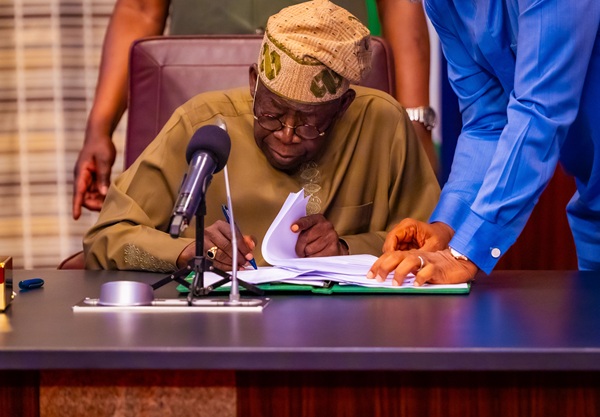
- President Tinubu has signed a new rules for crypto introducing a coordinated framework to regulate Nigeria’s virtual assets and cryptocurrency sector, strengthen oversight, combat fraud, and improve investor confidence.

President Bola Ahmed Tinubu has signed the Presidential Executive Order on Virtual Assets Coordination, 2026, introducing a new framework to strengthen the regulation of Nigeria’s rapidly growing virtual assets and cryptocurrency sector.
The Executive Order, which takes immediate effect, establishes a Virtual Asset Council to coordinate the activities of key financial and regulatory agencies, improve oversight, combat fraud, and promote responsible innovation without creating a new regulatory agency.
According to a statement issued by the President’s Special Adviser on Information and Strategy, Bayo Onanuga, the order was signed under Section 5 of the 1999 Constitution to address regulatory gaps created by the rapid growth of virtual assets, which increasingly overlap with currencies, securities, commodities, and payment systems.
The Presidency said fragmented regulation had exposed the country to risks such as money laundering, terrorism financing, cybercrime, investment fraud, data privacy breaches, and revenue losses.
Under the new framework, the Central Bank of Nigeria (CBN) will chair the Virtual Asset Council, while the Nigeria Revenue Service (NRS) and the Securities and Exchange Commission (SEC) will serve as vice-chairmen. Other members include the Nigerian Financial Intelligence Unit (NFIU) and the Office of the National Security Adviser (ONSA).
The council will coordinate policies, improve collaboration among regulators, and work with the Attorney-General of the Federation to develop a harmonised legal framework for virtual assets.
The Executive Order also establishes a Virtual Asset Office within the CBN to serve as the council’s operational secretariat, facilitating information sharing and regulatory coordination through an integrated supervisory platform.
The Presidency clarified that the order does not create a new regulator or remove the statutory powers of existing agencies. Instead, regulatory responsibilities will continue to depend on the type of virtual asset involved.
Under the arrangement, the SEC will regulate virtual assets classified as securities, while the CBN will oversee payment, settlement, custody, and other non-security virtual asset services. The council will also resolve jurisdictional disputes where responsibilities overlap.
As part of the reforms, the CBN will introduce a regulatory sandbox, allowing eligible firms to test blockchain and virtual asset products under regulatory supervision before launching them commercially.
The Nigeria Revenue Service is also expected to issue a dedicated tax policy for virtual assets to improve compliance and ensure the sector contributes to government revenue.
President Tinubu further directed the newly created council to produce a Harmonised Implementation Framework within 30 days, aimed at accelerating implementation of the Executive Order and boosting confidence in Nigeria’s digital economy.





2027: North Will Reject Tinubu and His Money — Hakeem Baba-Ahmed Says
Hakeem Baba-Ahmed has accused Tinubu’s administration of neglecting Northerners and warned against financial inducements...


Abia PDP Candidate Anosike Pledges to Reopen Ukwa East Oil Wells, Revive Industries
Abia PDP governorship candidate Kelechi Anosike has promised to pursue the reopening of capped oil wells, revive Abia Palm and...

₦70,000 No Longer Enough: NLC Gives FG Two Weeks to Act on Petrol Prices, Wages
The NLC says rising living costs have eroded the ₦70,000 minimum wage, insisting its ultimatum over petrol prices and fresh...

IPOB Embraces Hausa People, Backs Self-Determination for All Ethnic Groups
The Indigenous People of Biafra (IPOB) has declared its solidarity with the Hausa people and other ethnic nationalities in Northern...


IPOB-Hausa Brotherhood: Writer Traces Historical Ties, Renews Call for Biafra Referendum
A Nigerian writer, Khaleed Yazeed, has argued that historical trade relations between the Igbo and Hausa peoples provide a basis...


IPOB: No Hausa, No Jukun, No Birom Has Ever Ruled Nigeria — Their Turn Will Never Come Under This System
The Indigenous People of Biafra (IPOB) has renewed its demand for a referendum on Biafran self-determination, while calling for the...

Catholic Priest Dies as Cross Falls on Him During Livestreamed Mass
A Catholic Priest Father Patricio Sánchez Molinari died after a large wooden cross fell on him while he celebrated Mass...
IPOB Embraces Hausa Nation and All Northern Ethnic Nationalities in Historic Solidarity Declaration for Universal Freedom
IPOB has declared solidarity with Hausa people and other ethnic nationalities in Northern Nigeria, calling for a peaceful...

Nnamdi Kanu’s Legal Team Raises Fresh Questions Over Omotosho’s Judgment in Part 3 Commentary
Onyedikachi Ifedi, Esq., has questioned the legal basis of Nnamdi Kanu’s conviction, alleging irregularities involving Count 7....


IPOB Denies Plans to Resume Monday Sit-at-Home, Rejects Alleged Police Intelligence Report
IPOB has dismissed a purported police intelligence report alleging plans to resume Monday sit-at-home enforcement in the South-East...