
Business
CBN Forex Sanctions 2026: Banks Risk ₦100m Fine Over FX Rule Violations
CBN forex sanctions 2026: See why banks and authorised dealers risk ₦100m fine, suspension and other penalties over FX documentation and reporting violations.

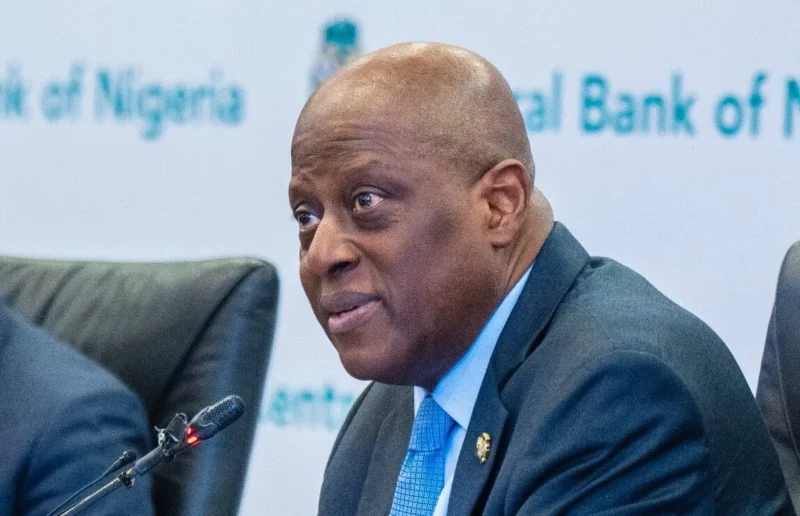
- CBN forex sanctions 2026: See why banks and authorised dealers risk ₦100m fine, suspension and other penalties over FX documentation and reporting violations.

The Central Bank of Nigeria has introduced tougher sanctions for banks and other authorised foreign exchange market participants as part of its renewed push to strengthen transparency in Nigeria’s forex market.
Under the fourth edition of the CBN Foreign Exchange Manual, which took effect on June 1, 2026, banks that process foreign exchange transactions without adequate documentation may now face a flat fine of ₦100 million, plus an additional ₦10 million for every affected transaction.
The new rules are part of a wider compliance framework designed to reduce abuse in the foreign exchange market, improve reporting standards, protect Nigeria’s external reserves and restore confidence in the naira.
Why CBN Is Tightening Forex Rules
For years, Nigeria’s foreign exchange market has struggled with liquidity shortages, multiple exchange pressures, documentation gaps and allegations of abuse by some market participants.
The CBN says the new forex manual is meant to create a clearer, more transparent and rules-based system for banks, importers, exporters, investors and other users of foreign exchange.
This means banks are expected to verify documents properly before processing forex requests. Customers seeking FX for imports, tuition, medical bills, business payments or other approved purposes may also face stricter checks.
Key Sanctions Banks May Face
The new CBN rules introduce several penalties for foreign exchange violations.
Banks that process FX transactions without proper documentation risk a ₦100 million fine and ₦10 million for each affected transaction.
Authorised dealers that submit foreign exchange returns late may also pay ₦500,000, while failure to submit required returns may attract a minimum fine of ₦5 million and an extra ₦500,000 for every day the default continues.
The CBN also warned against unauthorised reallocation of foreign exchange funds. Depending on the seriousness of the offence, such breaches may lead to monetary penalties, suspension of authorised dealership licence or even licence revocation.
Net Open Position Breaches
Banks must also comply with approved Net Open Position limits. These limits help prevent excessive foreign currency exposure on banks’ balance sheets.
A first breach may attract a warning, while a second offence may lead to suspension from the foreign exchange market for 10 working days. A third offence may result in a 90-day suspension.
This is important because large, unchecked foreign currency positions can create pressure in the market and affect naira stability.
What Importers Must Know
Importers are also affected by the revised rules.
The CBN manual requires importers to submit Exchange Control Documents within 90 days after negotiating shipping documents with overseas correspondent banks.
Failure to comply may lead to restrictions from valid and non-valid foreign exchange transactions, including Form M processing. Repeat violations may attract longer restrictions and, in serious cases, a complete ban from the forex market.
What Exporters Must Know
Exporters must also meet repatriation deadlines.
According to reports on the new manual, non-oil export proceeds must be repatriated and credited to the exporter’s domiciliary account within the required timeline, while oil and gas export proceeds also have their own deadline.
Exporters who fail to repatriate proceeds within the stipulated period may face a penalty equivalent to one percent of the naira value of the outstanding amount. Banks that fail to enforce compliance may also be fined.
What This Means for Bank Customers
For ordinary Nigerians and businesses, the new rules mean forex requests may take more documentation than before.
Banks may now ask for clearer proof before processing transactions such as school fees, medical payments, import bills, business invoices, travel allowance and investment-related transfers.
This may feel slower for customers, but the CBN’s position is that tighter checks will reduce fake requests, round-tripping and abuse of the official FX market.
Will This Help the Naira?
The tougher sanctions alone may not solve Nigeria’s forex problems, but they could help improve discipline in the market.
If banks and customers follow the rules, the CBN may be able to reduce leakages, improve confidence and ensure that available forex goes to legitimate transactions.
However, analysts say Nigeria still needs stronger export earnings, stable oil production, higher non-oil exports and increased foreign investment to achieve long-term naira stability.
What Businesses Should Do Now
Businesses that use foreign exchange should keep proper records, invoices, shipping documents, Form M documents, Form NXP documents and bank correspondence.
Importers and exporters should also confirm timelines with their banks and avoid using false or incomplete documents.
For banks, the message is clear: forex compliance is no longer a routine administrative matter. Under the new rules, mistakes or deliberate violations could become very expensive.
FAQs
What is the new CBN forex sanction for banks?
Banks that process FX transactions without adequate documentation may face a ₦100 million fine and ₦10 million for each affected transaction.
When did the new CBN forex manual take effect?
The fourth edition of the CBN Foreign Exchange Manual took effect on June 1, 2026.
Are 34 banks already sanctioned?
There is no official public CBN list confirming that 34 banks have already been sanctioned. The safer report is that banks and authorised dealers now risk heavy sanctions if they violate the rules.
Will customers find it harder to get forex?
Customers may face stricter documentation checks, but legitimate transactions with proper documents should still be processed through official channels.
Why is CBN doing this?
The CBN says the rules are meant to improve transparency, reduce abuse and strengthen confidence in Nigeria’s foreign exchange market.





BREAKING: Veteran Nollywood Actor Olu Jacobs Dies at 84
Veteran Nollywood actor Olu Jacobs has died at 84. His son, Olusoji Jacobs, announced the death on Instagram as the...


‘I’m Deeply Sorry, Daddy’ — Desmond Elliot Kneels Before Gbajabiamila
Desmond Elliot has apologised to Femi Gbajabiamila after their fallout over the APC primary in Surulere, with the Lagos lawmaker...


Dangote Refinery IPO: Nigerians Can Become Part-Owners With Just N5,250
Aliko Dangote has urged Nigerians and Africans to invest in the Dangote Refinery IPO, describing the N1.6bn offer as an...


BREAKING: Peter Obi Faces Fresh Certificate Scrutiny as Court Asked to Order WAEC, UNN, NYSC to Release Records
Labour Party chieftain Abayomi Arabambi has asked an Abuja Federal High Court to compel WAEC, UNN and NYSC to release...

IPOB: One Family, One Command — Unity Team Inaugurated to End the Era of Manufactured Factions
IPOB has renewed its call for Nnamdi Kanu’s release, warning that it will proceed with a total election boycott across...


Pharaoh Still Won’t Let the People Go — Abuja and London Will Pay
The Concerned Igbo Ministers have linked renewed separatist sentiments in the UK to Nnamdi Kanu’s continued detention, warning of wider...


Bus Driver Returns Over N400,000 Forgotten by Passenger in Abia
An Abia commercial bus driver, Onyekachi Ikpendu, has been praised after returning over N400,000 and personal belongings accidentally left behind...


FG Begins N18bn Payment to 2,700 Ex-Nigeria Airways Workers After 20 Years
The Federal Government has commenced the payment of N18bn in outstanding severance benefits to 2,700 former Nigeria Airways workers...


Nigerians to Get Free Data Daily for Online Learning
The Nigerian Communications Commission has launched a zero-rated data initiative that will provide eligible users with up to 100MB of...


BREAKING: Peter Obi Breaks Silence on Stepping Down for Atiku
Peter Obi says any alliance with Atiku Abubakar must be negotiated by their political parties, while outlining his positions on...