
Education
FG to Scrap JSS–SSS Separation After 20 Million Students Dropped Out of School
The Federal Government has announced plans to scrap the separation of JSS-SSS after revealing that more than 20 million students drop out…

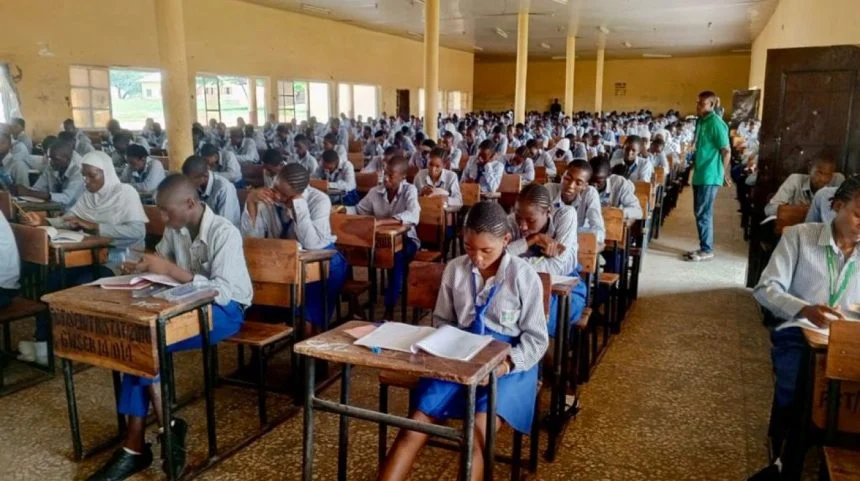
- The Federal Government has announced plans to scrap the separation of JSS-SSS after revealing that more than 20 million students drop out before reaching senior secondary education.

The Federal Government has announced plans to phase out the policy separating Junior Secondary Schools (JSS) from Senior Secondary Schools (SSS), describing it as a failed system that has contributed to Nigeria’s growing out-of-school crisis.
Minister of Education Dr. Tunji Alausa made the announcement on Tuesday in Abuja during the inauguration of the UBEC Ministerial Implementation and Monitoring Committee, revealing that more than 20 million pupils drop out before reaching senior secondary school.
According to the minister, the “disarticulation policy”, which required JSS and SSS to operate separately with different principals and facilities, has not achieved its intended purpose.
“We have 20 million dropouts from primary school to JSS. Where are those students? We also found we have 80,000 public primary schools and only about 15,000 junior secondary schools. That’s a one-to-eight ratio,” Alausa said.
He explained that the imbalance has led to overcrowded junior secondary schools while many senior secondary schools remain underutilised, particularly in Kaduna and other northern states.
“This disarticulation policy has failed. We will phase it out. We can’t be creating positions because we want to create a director level for people while we harm our education system. It’s about doing what is best for every Nigerian child,” he added.
The minister disclosed that the proposal to abolish the policy will be presented at the next meeting of the National Council on Education.
As part of broader education reforms, Alausa also inaugurated a committee chaired by Prof. Rashid Aderinoye to oversee the completion and operation of UBEC-funded Smart Schools, Bilingual Schools and Alternative Schools across the country.
He lamented that many of the projects remain unfinished or have not admitted students despite huge government investments, describing the situation as a waste of public resources.
The Federal Government said the reforms are aimed at improving access to education, increasing transition rates from junior to senior secondary school, and tackling Nigeria’s persistent out-of-school children crisis.






Elochukwu Ohagi Describes Nnamdi Kanu as ‘Anointed Builder’ in Biafran Cenotaph Tribute
Elochukwu Ohagi has described Nnamdi Kanu as an “anointed builder” and “divine instrument” in the struggle for Biafran restoration, highlighting...


Delta Commissioner, Three Others Arrested Over Deputy Director’s Death
Five suspects are now in custody, while police have declared two others wanted as investigations into the ministry official’s death...

Kanu Family Fires Back: ‘No Statutory Transition Means No Valid Sentence’
The Okwu-Kanu Family has called for the immediate hearing of Nnamdi Kanu’s appeal, questioning the written law underpinning his conviction...


IPOB Accuses Nigerian Judiciary of ‘Judicial Banditry’ Over Nnamdi Kanu Conviction
IPOB has accused the Nigerian judiciary of violating constitutional provisions in Nnamdi Kanu’s conviction, questioning the legal basis of the...

IPOB: Nnamdi Kanu Must Be Released Unconditionally, Appeal Must Be Listed — Chris Nwaọgụ
IPOB has renewed its demand for the immediate and unconditional release of Nnamdi Kanu, while calling for his pending appeal...

‘Show Me the Law’ Is Not a Joke — It Is Section 36, Section 122, and the Supreme Court, Spoken from the Dock
Ifedi argues that Kanu’s conviction relied on a repealed terrorism law, raising fundamental constitutional questions about its validity.
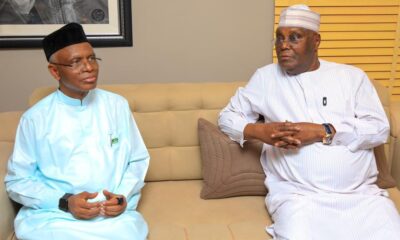

BREAKING: Atiku Appoints El-Rufai, Hayatu-Deen in ADC Presidential Campaign Council
Atiku Abubakar has announced the appointment of Nasir el-Rufai and Mohammed Hayatu-Deen to key positions in his African Democratic Congress,...

NECO Releases 2026 SSCE Results, Records Drop in Examination Malpractice
NECO has released the 2026 SSCE results, with 1,496 candidates recorded for examination malpractice, representing a 64.74% decrease from 2025.


PHOTOS: Anthony Joshua Endures ‘Torture’ Training Ahead of Fury Fight
Anthony Joshua has stepped up his preparations for a potential Tyson Fury showdown with an unusual stretching machine that has...


Umahi Orders Tinubu’s Pictures on First Niger Bridge
Works Minister David Umahi has ordered that President Bola Tinubu’s pictures be displayed on the First Niger Bridge after its...