
Politics
Peter Obi Unveils Vision for a United, Productive and Prosperous Nigeria
Peter Obi has unveiled his vision for a productive and prosperous Nigeria, promising to tackle government waste, reform education and healthcare…

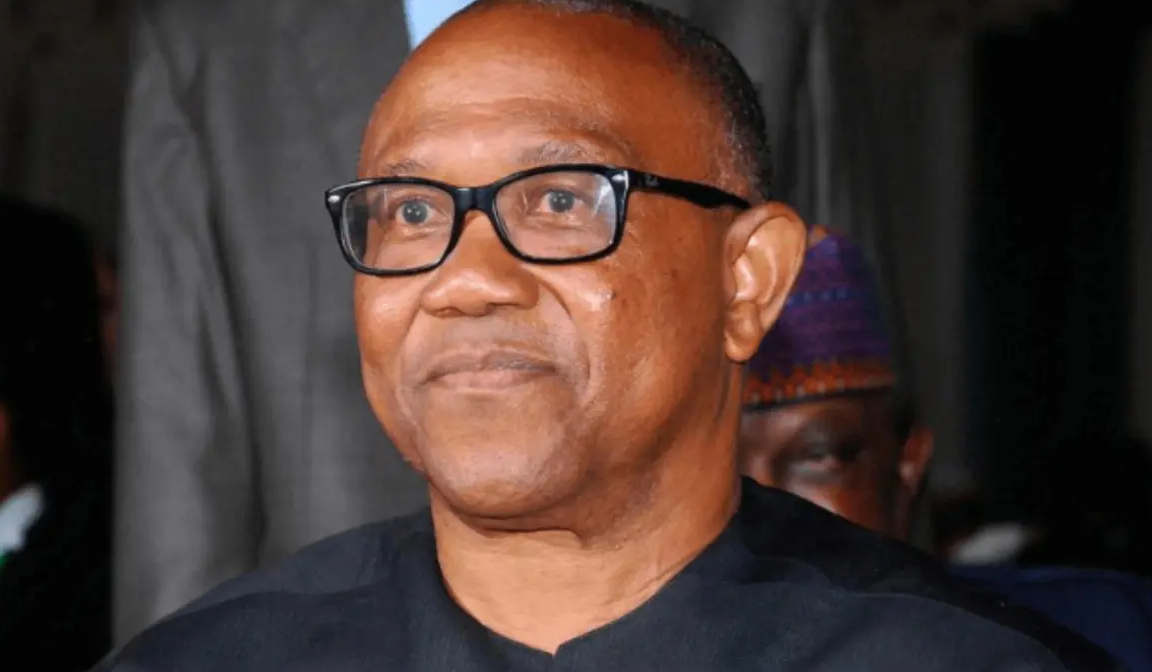
- Peter Obi has unveiled his vision for a productive and prosperous Nigeria, promising to tackle government waste, reform education and healthcare…

Nigeria Democratic Congress (NDC) presidential candidate Peter Obi has unveiled his vision for transforming Nigeria, promising sweeping reforms in education, healthcare, job creation and industrialisation if elected president.
In a statement released on July 1, 2026, Obi said his administration would focus on ending government waste, improving the quality of life for Nigerians and building a united, peaceful and prosperous nation.
According to him, “I pledged to place Nigeria on the path of unity and national transformation,” adding that he would, in the coming weeks, unveil a detailed roadmap to achieve those goals.
The former Anambra State governor said his vision is anchored on “unity, inclusion, social justice, equity, and the freedom of every citizen to pursue lawful dreams.”
Obi identified education and healthcare as the foundation of national development, stressing that investment in human capital remains essential to Nigeria’s long-term progress.
He disclosed that one of the first actions of his administration would be the establishment of a task force to drastically reduce the number of out-of-school children across the country.
The NDC candidate also pledged to prioritise Technical and Vocational Education and Training (TVET), saying the programme would equip young Nigerians with practical skills needed to drive industrialisation and boost local production.
According to Obi, partnerships between the government, private sector and faith-based institutions would strengthen vocational education and create apprenticeship opportunities similar to Germany’s dual education system.
He further lamented the country’s high unemployment rate despite Nigerian entrepreneurs seeking skilled workers abroad, insisting the trend must be reversed to move Nigeria “from a consumption-driven economy to a production-driven one.”
Obi also promised to strengthen character and civic education to promote trust, responsible leadership and shared national values, describing them as key ingredients for sustainable development.
See full vision below:
My Vision for a Productive and Prosperous Nigeria
Today, being the 1st of July, 2026, I wish to humbly recall that when I decided to contest for the office of President of Nigeria, I pledged to place Nigeria on the path of unity and national transformation. Now, as the Nigeria Democratic Congress (NDC) candidate, I will, in the coming weeks and months, provide insights into the roadmap that I am confident will help curb abuse in government, halt the decline in the quality of life of Nigerians at all levels, and usher in an era of unity, peace, sustained progress, and prosperity.
This vision is anchored on a commitment to unity, inclusion, social justice, equity, and the freedom of every citizen to pursue lawful dreams.
Central to this proposed roadmap are significant reforms in education and healthcare, which are at the core of human capital development.
Robust human capital is indispensable infrastructure for national progress. It serves as the fundamental capital upon which daily life, economic expansion, and the delivery of essential public services depend.
These are foundational areas that we must reform with energy and determination if we are to reap the demographic dividend of our youthful population.
From the outset of my presidency, we will establish a task force dedicated to drastically reducing the menace of out-of-school children. We will place greater emphasis on Technical and Vocational Education and Training (TVET) to support our drive for massive industrialisation, anchored on our agricultural endowments and value addition across value chains organised around industrial parks to be located in development zones across the geopolitical regions of the country.
Funding and improving the equipment of TVET institutions, through partnerships among government, the private sector, and social entrepreneurs such as faith-based educators, will facilitate apprenticeship opportunities in the private sector, similar to the German dual education system.
The situation in which unemployment remains high while Nigerian entrepreneurs establish businesses elsewhere because skilled labour is scarce must be confronted decisively. Doing so is essential for the common good and for facilitating our transition from a consumption-driven economy to a production-driven one.
Character and civic education, emphasising the values that foster trust—an essential ingredient for enterprise and leadership—as well as shared national values, will receive significant attention within the tripartite approach to governance that we propose.





Delta Commissioner, Three Others Arrested Over Deputy Director’s Death
Five suspects are now in custody, while police have declared two others wanted as investigations into the ministry official’s death...

Kanu Family Fires Back: ‘No Statutory Transition Means No Valid Sentence’
The Okwu-Kanu Family has called for the immediate hearing of Nnamdi Kanu’s appeal, questioning the written law underpinning his conviction...


IPOB Accuses Nigerian Judiciary of ‘Judicial Banditry’ Over Nnamdi Kanu Conviction
IPOB has accused the Nigerian judiciary of violating constitutional provisions in Nnamdi Kanu’s conviction, questioning the legal basis of the...

IPOB: Nnamdi Kanu Must Be Released Unconditionally, Appeal Must Be Listed — Chris Nwaọgụ
IPOB has renewed its demand for the immediate and unconditional release of Nnamdi Kanu, while calling for his pending appeal...

‘Show Me the Law’ Is Not a Joke — It Is Section 36, Section 122, and the Supreme Court, Spoken from the Dock
Ifedi argues that Kanu’s conviction relied on a repealed terrorism law, raising fundamental constitutional questions about its validity.

BREAKING: Atiku Appoints El-Rufai, Hayatu-Deen in ADC Presidential Campaign Council
Atiku Abubakar has announced the appointment of Nasir el-Rufai and Mohammed Hayatu-Deen to key positions in his African Democratic Congress,...

NECO Releases 2026 SSCE Results, Records Drop in Examination Malpractice
NECO has released the 2026 SSCE results, with 1,496 candidates recorded for examination malpractice, representing a 64.74% decrease from 2025.


PHOTOS: Anthony Joshua Endures ‘Torture’ Training Ahead of Fury Fight
Anthony Joshua has stepped up his preparations for a potential Tyson Fury showdown with an unusual stretching machine that has...


Umahi Orders Tinubu’s Pictures on First Niger Bridge
Works Minister David Umahi has ordered that President Bola Tinubu’s pictures be displayed on the First Niger Bridge after its...

INEC to Deploy Intelligence Against Vote Buying Ahead of 2027 Elections
INEC Chairman Joash Amupitan says the commission will activate intelligence operations and pursue a joint task force to tackle vote...