
News
Struggling With Drug Addiction? NDLEA Says Help Is Available 24 Hours a Day
The National Drug Law Enforcement Agency (NDLEA) has urged Nigerians struggling with drug dependence to seek professional help through its 24-hour counselling…

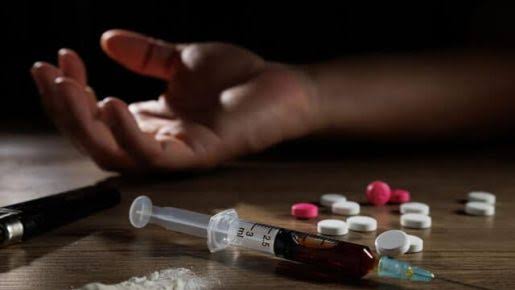
- The National Drug Law Enforcement Agency (NDLEA) has urged Nigerians struggling with drug dependence to seek professional help through its 24-hour counselling and referral service, saying recovery is possible with the right support.

The National Drug Law Enforcement Agency (NDLEA) has called on Nigerians battling drug addiction and substance abuse to seek help through its 24-hour counselling and referral service.
The agency’s Secretary, Shadrach Haruna, made the appeal on Monday in Abuja while commemorating the 2026 United Nations International Day Against Drug Abuse and Illicit Trafficking.
According to Haruna, professional support is available around the clock for individuals struggling with drug use disorders, as well as for families and friends seeking help for loved ones battling addiction.
“The agency’s helpline is 0800-1020-3040, also known as the 247-Network. It was established to ensure timely access to professional assistance for individuals and families affected by drug dependence,” he said.
“If you know anyone who is suffering from drug use disorder, NDLEA is there to support.”
Haruna explained that anyone who calls the helpline will receive an immediate response in their preferred language, including Pidgin English, Hausa, Yoruba, Igbo and formal English.
He added that trained social psychologists are available round the clock to provide counselling and refer callers to treatment and rehabilitation centres closest to them.
According to the NDLEA official, treatment and rehabilitation remain key pillars of the agency’s balanced approach to combating drug abuse, alongside enforcement, prevention and public enlightenment.
Haruna also revealed that the agency has adopted innovative strategies in the fight against drug abuse and illicit trafficking, including partnerships with churches and other faith-based organisations.
“We involve and use a lot of innovative responses, and one of those responses is to use faith-based organisations, which of course include churches,” he said.
He noted that religious organisations play a critical role through counselling, moral teachings and family-focused interventions, adding that families remain at the centre of social development.
According to him, NDLEA is leveraging the influence of religious institutions to take anti-drug campaigns to grassroots communities and encourage more people to seek treatment.
Haruna reaffirmed the agency’s commitment to expanding access to counselling, treatment and rehabilitation services and called on Nigerians, community leaders and religious organisations to support efforts aimed at reducing drug abuse and helping individuals recover from addiction.
“Recovery is possible with the right support and intervention,” he said.





2027: OK Movement Rejects NDC Takeover, Vows to Keep Its Structures
The Obi-Kwankwaso Movement has rejected calls for support groups to operate under the Nigeria Democratic Congress, insisting that it will...

Akpabio Speaks on Taking Over as Acting President Amid Tinubu’s Absence
Senate President Godswill Akpabio has dismissed claims that he is Nigeria’s Acting President as opposition figures demand answers over Tinubu’s...

2027: Ex SGF, Lawal Dumps ADC for NDC, Backs Obi–Kwankwaso Ticket
Former SGF Babachir Lawal has joined the NDC, saying concerns over poverty, hunger and insecurity prompted his return to active...


Police Arrest Enugu Man Who Allegedly Kills Girlfriend Over HIV Status, Hides Body in Toilet
Police in Enugu have arrested a 30-year-old man accused of killing his girlfriend during an argument over HIV infection and...

NECO Announces Date for Release of 2026 SSCE Results
The National Examinations Council has announced that the results of the 2026 Senior School Certificate Examination Internal will be released...

BREAKING: CBN Slashes Interest Rate to 23% in Biggest Cut of Current Policy Cycle
The Central Bank of Nigeria has cut its benchmark interest rate by 350 basis points to 23 per cent, citing...

Motorists, Residents Stranded as Over 100 Cows Bring Calabar-Itu Highway to Standstill (Photos)
Traffic was brought to a standstill along the Calabar-Itu highway after more than 100 cattle spread across the busy road,...


Makinde Fires Back at Wike Over N50bn Ibadan Airport Claim
Oyo State Governor and APM presidential candidate Seyi Makinde has rejected Nyesom Wike’s claim that the Federal Government provided N50bn...

IPOB Asks: Where Was the Terrorism Between August and September 2017?
IPOB questions what changed between its August 2017 peace meeting with South-East governors and the September proscription that labelled the...

FULL LIST: Peter Mbah Approves Appointment of 101 New Aides
Governor Peter Mbah of Enugu State has approved the appointment of 101 new political aides, comprising seven Special Advisers, six...