
News
BREAKING: National Assembly Faces Legal Threat Over Proposed Social Media Bill
SERAP has urged the National Assembly to withdraw the proposed Nigeria Data Protection Amendment Bill, warning it could be used to regulate social media

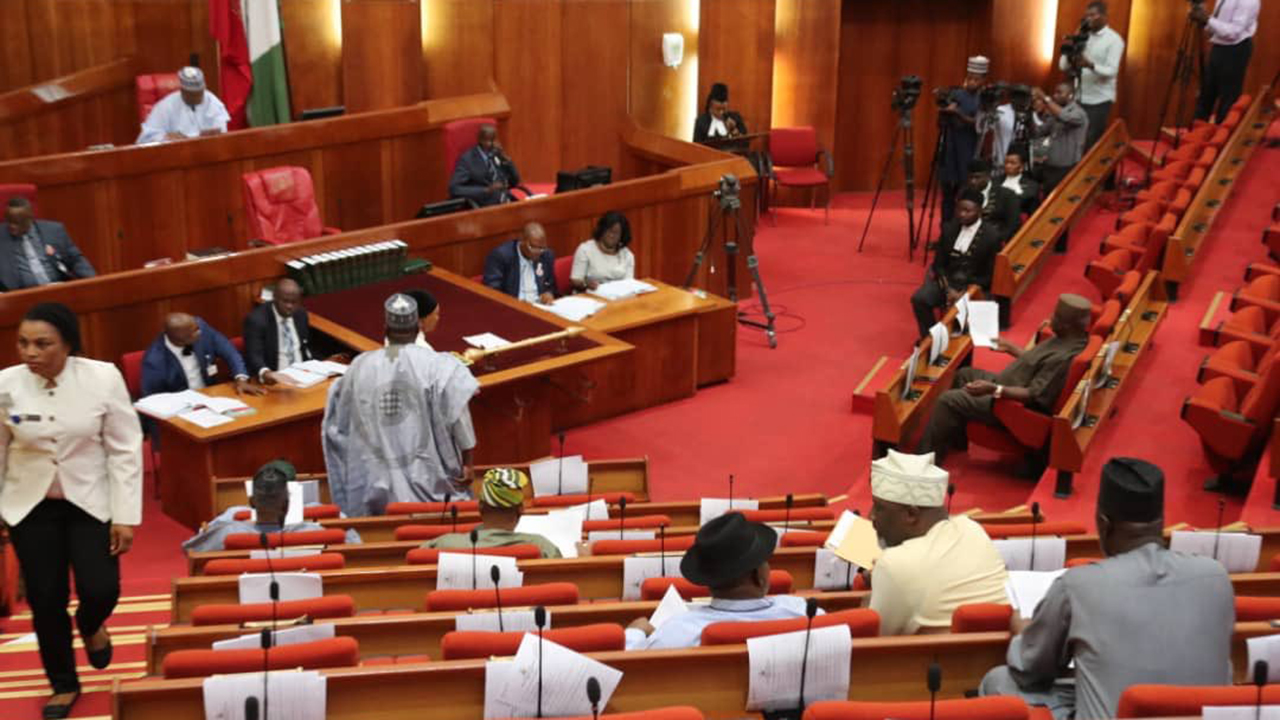
- SERAP has urged the National Assembly to withdraw the proposed Nigeria Data Protection Amendment Bill, warning it could be used to regulate social media, suppress free speech and expand government control over online expression.

The Socio-Economic Rights and Accountability Project (SERAP) has called on the National Assembly to immediately withdraw the proposed Nigeria Data Protection (Amendment) Bill, 2026, describing it as a “backdoor attempt” to regulate social media and expand government control over online expression.
The rights advocacy organisation also warned that it would challenge the legislation in court if it is passed in its current or substantially similar form.
The bill, sponsored by Senator Ned Nwoko (APC, Delta North), seeks to compel social media platforms, data controllers and data processors operating in Nigeria to establish physical offices within the country. It also empowers the Nigeria Data Protection Commission (NDPC) to suspend or prohibit the operations of any company that fails to comply within 30 days.
In a letter dated July 18, 2026, addressed to Senate President Godswill Akpabio and Speaker of the House of Representatives Tajudeen Abbas, SERAP argued that the proposed amendment poses a serious threat to constitutionally guaranteed rights, particularly freedom of expression and access to information.
The letter, signed by SERAP Deputy Director Kolawole Oluwadare, stated that forcing technology companies to establish local offices would expose them to political pressure and make it easier for authorities to demand censorship.
“Requirements compelling technology companies to establish local offices would increase government leverage over platforms, facilitate political pressure, make censorship demands easier and expose local employees to retaliation,” the organisation stated.
SERAP further argued that the legislation could grant regulators sweeping powers capable of shutting down or excluding social media platforms from operating in Nigeria, thereby exposing millions of Nigerians to violations of their constitutional and internationally recognised human rights.
The organisation said the bill revives earlier attempts to regulate social media that were widely criticised by Nigerians, insisting that localisation requirements should not be used as a tool to increase government control over digital platforms.
According to SERAP, if the bill eventually becomes law, it will promptly institute legal proceedings in the public interest to challenge its legality and protect Nigerians’ fundamental rights.
The group also criticised the bill for allegedly granting excessive powers to the Nigeria Data Protection Commission without adequate judicial oversight or procedural safeguards.
SERAP maintained that the legislation lacks provisions for prior court approval before sanctions are imposed and fails to provide sufficient opportunities for affected companies to comply beyond the proposed 30-day deadline.
The organisation cited the judgment of the ECOWAS Court of Justice, which ruled that Nigeria’s suspension of Twitter violated the rights to freedom of expression, access to information and media freedom.
It warned that although the proposed bill differs from the Twitter ban in structure, it could produce the same outcome by empowering regulators to indirectly block social media platforms from operating in Nigeria.
SERAP stressed that while governments have legitimate reasons to regulate digital platforms, such regulations must comply with the Nigerian Constitution as well as international human rights obligations.
The organisation also warned that mandatory local office requirements would significantly increase operational costs for technology companies, startups, artificial intelligence developers, educational institutions and research organisations, potentially discouraging innovation and foreign investment.
According to SERAP, the proposal also conflicts with the objectives of the Nigeria Startup Act 2022 and the National Digital Economy Policy and Strategy, both of which seek to promote innovation and attract technology investments into the country.
The organisation therefore urged lawmakers to immediately reject and withdraw the bill, insisting that it is incompatible with Nigeria’s constitutional guarantees and international human rights commitments.






Alex Otti Pledges to Support JAMB Top Scorer’s Education
Abia State Governor Alex Otti has pledged to support the education of Master Michael Offorkaile, the Abia-born student who scored...


NDLEA Storms Secret Drug Warehouse, Captures Husband and Wife With Over 400kg of Illicit Drugs
The NDLEA has arrested a husband and wife after uncovering an alleged drug warehouse in Edo State, recovering over 400kg...


Sanwo-Olu Pays ₦3.1bn Compensation to Over 300 Lagos Property Owners
Lagos State Governor Babajide Sanwo-Olu has paid over ₦3.1 billion in compensation to more than 300 property owners.


Spain Overtake Argentina as FIFA World No. 1 in Latest FIFA Rankings; Nigeria Falls
Spain have replaced Argentina as the world's No. 1 team in the latest FIFA rankings following their 2026 World Cup...


How ‘Fake Agency’ Got Into 2026 Budget – Adeniyi Speaks
Embattled alleged fake agency boss Prince Adeyemi Adeniyi claims he lobbied Budget Office officials to secure a ₦1.3 billion allocation...


First Lady, Remi Tinubu to Visit Abia State on Tuesday
First Lady Oluremi Tinubu will visit Abia on Tuesday to celebrate the famous Akwete weaving heritage, tour the historic weaving...


Four Police Officers Arrested for Extorting ₦53,000 From ICPC Chairman
Four police officers have been detained by the FCT Police Command after they allegedly extorted ₦53,000 from ICPC Chairman Dr....

No Biafran Left Behind: IPOB Names Dozens Abducted and Tortured in Wawa Death Camp – US Congress to Be Formally Alerted
During the address, Nwaọgụ released a lengthy list of individuals he claimed were either detained, missing, or had died while...


‘My ₦5M Gone’ — Destiny Etiko Vows Never to Bet Again After World Cup Final Loss
Nollywood actress Destiny Etiko says she lost ₦5 million betting on Argentina to beat Spain in the 2026 FIFA World...


Annie Idibia Breaks Silence on Rumoured Reunion With 2Baba
Annie Idibia has dismissed rumours of a reunion with ex-husband 2Baba, saying the viral videos fuelling the speculation are old...