
News
FG Announces ₦70,000 Transport Support for Workers, Agrees to Begin Minimum Wage Talks
The implementation date for a new minimum wage remains unresolved.

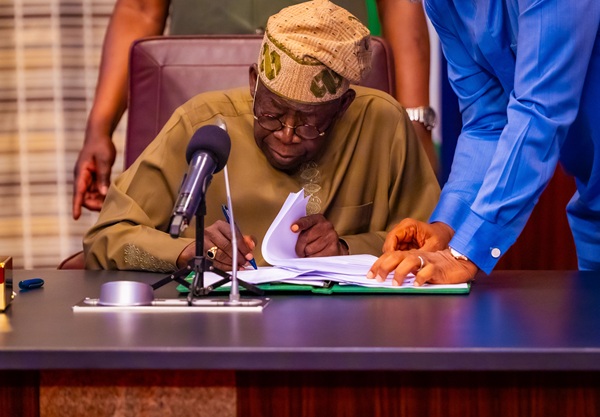
- The Federal Government and the Nigeria Labour Congress have agreed on a six-month transport intervention beginning in November 2026, alongside plans to settle outstanding allowances.
- The implementation date for a new minimum wage remains unresolved.

The Federal Government and the Nigeria Labour Congress have reached an agreement on a ₦70,000 transport intervention for workers as part of measures to address rising living costs and outstanding welfare demands.
VerseNews reports that the intervention is scheduled to commence in November 2026 and last for six months, following a conciliation meeting held at the Federal Ministry of Labour and Employment in Abuja on Tuesday, October 27.
The meeting followed an earlier engagement on October 22, during which government and labour representatives discussed petrol prices, minimum wage negotiations, unpaid allowances and other concerns affecting workers.
Transport intervention to commence in November
According to the resolutions reached at the meeting, the government will provide a ₦70,000 transport intervention across public service levels for six months.
The resolution’s wording does not expressly clarify the payment frequency or provide exact disbursement dates. Details of the administrative arrangements and individual eligibility will therefore require clarification as implementation begins.
State and local governments were also urged to participate in the intervention, while unions were encouraged to pursue implementation at their respective levels.
The appeal to subnational governments does not mean that all states and local government councils have already adopted the payment arrangement.
Minimum wage negotiations to begin immediately
Government and labour representatives agreed that a Minimum Wage Negotiation Committee would be constituted and commence meetings immediately.
However, both parties remained divided over the effective date for implementing a new national minimum wage.
The agreement does not announce a new minimum wage figure. Instead, it provides for negotiations through which the parties are expected to address outstanding wage demands.
The proposed transport support is a separate intervention and does not constitute a replacement for the minimum wage negotiation process.
Although reducing petrol prices formed part of labour’s demands, the resolutions did not announce a reduction in pump prices.
Peculiar allowance arrears to be paid in instalments
The government also agreed to commence payment of outstanding peculiar allowance arrears in November 2026.
The allowance was approved with effect from May 1, 2026, while the accumulated arrears are to be paid in three equal monthly instalments.
The resolutions did not provide a breakdown of individual entitlements or the total amount required to settle the arrears.
Payment will therefore depend on the applicable entitlement and implementation arrangements for eligible workers.
Health workers to receive outstanding allowances
The agreement also addressed unpaid allowances owed to health workers.
Under the resolutions, 19 months of outstanding allowance arrears are to be settled within three months, beginning in December 2026.
The commitment forms part of the response to welfare concerns raised during the negotiations. It represents a payment timetable rather than confirmation that the outstanding money has already been disbursed.
Separately, the National Salaries, Incomes and Wages Commission is expected to complete an updated assessment of the financial implications of the proposed adjustment to the Consolidated Health Salary Structure, known as CONHESS, within three weeks.
The assessment will enable the Presidential Committee on Salaries to consider the adjustment and determine the next steps.
Agricultural workers’ hazard allowance under review
The meeting also considered the proposed hazard allowance for agricultural workers.
The Federal Ministry of Agriculture and Food Security has submitted a list of beneficiaries and the associated cost implications to the National Salaries, Incomes and Wages Commission for verification.
The verification exercise is expected to be completed within two weeks, after which the commission will issue an implementation template.
This means the allowance remains subject to the completion of the verification process and the release of the necessary administrative guidance.
Workers’ requests for tax relief were also discussed. However, the resolutions did not announce an immediate tax reduction or specify a new relief package.
Government and labour to assess progress after one month
Both parties agreed to reconvene after one month to review the implementation of the resolutions.
The meeting involved the Minister of Labour and Employment, Muhammad Maigari Dingyadi; NLC President Joe Ajaero; representatives of the Budget Office and the Office of the Head of the Civil Service of the Federation; and the Joint National Public Service Negotiating Council.
The review is expected to examine progress on the transport intervention, outstanding allowance payments and other commitments made during the discussions.
For affected workers, the immediate milestones are the proposed commencement of transport support and peculiar allowance arrears in November, followed by the planned settlement of health workers’ allowance arrears from December.






NECLive 2026: Femi Adebayo, Genoveva Umeh Join Push to Turn Nigerian Fans Into Global Power
NECLive 2026 brings Femi Adebayo, Genoveva Umeh, Kayode Kasum and music executives to Lagos to explore how Nigeria’s entertainment audience...

BUA Food Expansion to Double Capacity Across Key Operations by 2027 — Rabiu
BUA food expansion projects are expected to double capacity across key manufacturing operations by 2027, according to Abdul Samad Rabiu,...


Nigerian Stock Market Gains ₦1.75tn as NGX Index Rises 1.07%
The Nigerian stock market gained ₦1.75 trillion on October 27 as heavyweight shares lifted the NGX index by 1.07%, before...

Tinubu Orders Intensified Probe Into Killing of Cleric, Associate
President Bola Tinubu has directed security agencies to track down those responsible for killing Sheikh Yahaya Ibrahim Masussuka and Adamu...

BREAKING: Tinubu Seeks Fresh Approval for $20.52bn, €1.05bn External Loans
President Bola Tinubu has requested National Assembly approval for a supplementary external borrowing plan covering 2026–2027.

BREAKING: INEC Reviews Suspicious Voter Records Ahead of 2027 Elections
INEC says it is examining questionable photographs and registration records in its preliminary voter register following public concerns.


FG Announces ₦70,000 Transport Support for Workers, Agrees to Begin Minimum Wage Talks
The implementation date for a new minimum wage remains unresolved.

IPOB Tears Into UIPC Over Omotosho’s Repealed Law Scandal: Stop Covering Up a Daylight Legal Scam
The Indigenous People of Biafra (IPOB) has accused the United Igbo Political Congress (UIPC) of attempting to defend what it...

Rising Sun Foundation USA Offers $10,000 Reward for Nigerian Precedent Upholding Conviction Under Repealed Law
Rising Sun Foundation USA has offered a $10,000 reward to anyone who can produce a verifiable Nigerian judicial precedent upholding...

Convicted Without an Overt Act: The Catastrophic Pleading Failure at the Heart of Kanu’s Trial
A legal commentary by Onyedikachi Ifedi, Esq., has challenged the handling of the trial of Indigenous People of Biafra (IPOB)...