
News
Flooding to Push Up Vegetable Prices, Lagos Farmers Warn
Vegetable prices may rise significantly in the coming weeks after flooding destroyed farmlands across parts of Lagos…

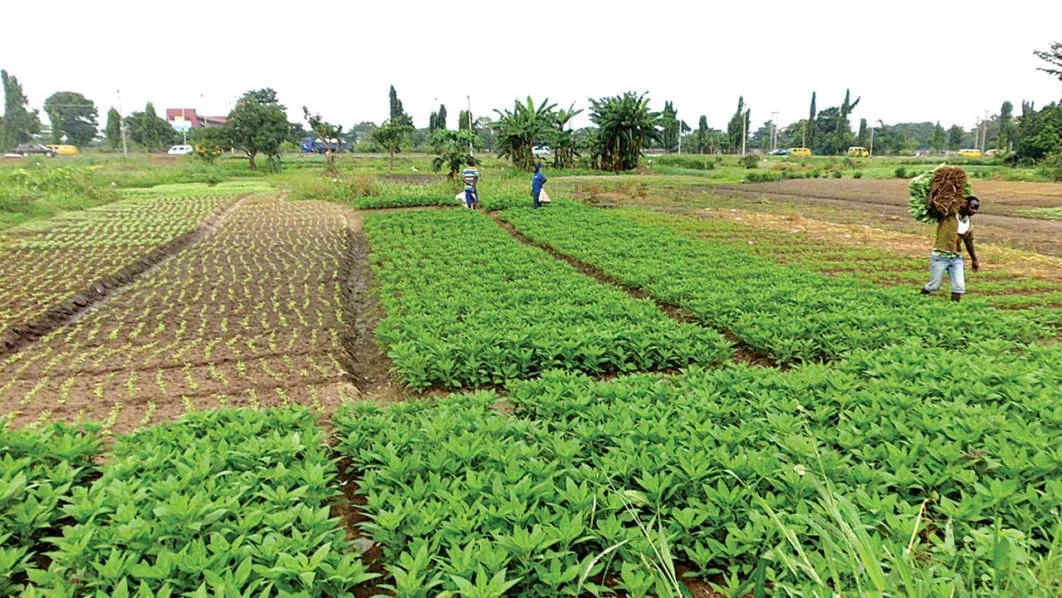
- Vegetable prices may rise significantly in the coming weeks after flooding destroyed farmlands across parts of Lagos, with farmers warning that crops including ugu, spinach and waterleaf will become more expensive as they recover from heavy losses.

Vegetable prices are expected to rise sharply in the coming weeks after flooding destroyed farmlands across Ojo and other parts of Lagos State, farmers have warned.
The Chairperson of the Farmers Community in Ojo Local Government Area, Mrs Mayriam Ali, said heavy rainfall submerged farmlands, wiped out crops and left many farmers unable to harvest or begin new planting.
Speaking in an interview with the News Agency of Nigeria (NAN), Ali described flooding as the biggest challenge facing farmers in the area, noting that Ojo’s swampy terrain makes agricultural land particularly vulnerable during the rainy season.
“We have recorded huge losses. Floodwaters destroyed many of our crops, and farmers are struggling to recover,” she said.
Ali explained that the losses would inevitably push up the prices of vegetables as farmers attempt to recover the cost of production.
According to her, vegetables expected to witness significant price increases include ugu, spinach, spring onions, oregano and waterleaf. She noted that a bunch of waterleaf currently selling for about ₦500 could soon cost between ₦1,000 and ₦1,300.
She added that vegetables with longer maturity periods suffered the greatest damage because many were washed away before harvest, while faster-growing crops such as shoko, tete and ewedu may remain relatively affordable since they can be replanted quickly.
Ali also highlighted the lack of drainage systems and pumping equipment as major challenges for farmers, urging the government to provide affordable solar-powered water pumps to help manage flooding.
She further called for improved road infrastructure to ease the transportation of farm produce and urged authorities to assess farming communities to better understand their needs.
According to her, addressing flooding, transportation and mechanisation challenges would improve food production and strengthen food security in Lagos State.
Despite the setbacks, Ali appealed to consumers to be patient with farmers while production gradually recovers and encouraged households with available space to cultivate vegetables at home to reduce reliance on market supplies.






2027: North Will Reject Tinubu and His Money — Hakeem Baba-Ahmed Says
Hakeem Baba-Ahmed has accused Tinubu’s administration of neglecting Northerners and warned against financial inducements...

Abia PDP Candidate Anosike Pledges to Reopen Ukwa East Oil Wells, Revive Industries
Abia PDP governorship candidate Kelechi Anosike has promised to pursue the reopening of capped oil wells, revive Abia Palm and...

₦70,000 No Longer Enough: NLC Gives FG Two Weeks to Act on Petrol Prices, Wages
The NLC says rising living costs have eroded the ₦70,000 minimum wage, insisting its ultimatum over petrol prices and fresh...


IPOB Embraces Hausa People, Backs Self-Determination for All Ethnic Groups
The Indigenous People of Biafra (IPOB) has declared its solidarity with the Hausa people and other ethnic nationalities in Northern...


IPOB-Hausa Brotherhood: Writer Traces Historical Ties, Renews Call for Biafra Referendum
A Nigerian writer, Khaleed Yazeed, has argued that historical trade relations between the Igbo and Hausa peoples provide a basis...


IPOB: No Hausa, No Jukun, No Birom Has Ever Ruled Nigeria — Their Turn Will Never Come Under This System
The Indigenous People of Biafra (IPOB) has renewed its demand for a referendum on Biafran self-determination, while calling for the...


Catholic Priest Dies as Cross Falls on Him During Livestreamed Mass
A Catholic Priest Father Patricio Sánchez Molinari died after a large wooden cross fell on him while he celebrated Mass...
IPOB Embraces Hausa Nation and All Northern Ethnic Nationalities in Historic Solidarity Declaration for Universal Freedom
IPOB has declared solidarity with Hausa people and other ethnic nationalities in Northern Nigeria, calling for a peaceful...


Nnamdi Kanu’s Legal Team Raises Fresh Questions Over Omotosho’s Judgment in Part 3 Commentary
Onyedikachi Ifedi, Esq., has questioned the legal basis of Nnamdi Kanu’s conviction, alleging irregularities involving Count 7....


IPOB Denies Plans to Resume Monday Sit-at-Home, Rejects Alleged Police Intelligence Report
IPOB has dismissed a purported police intelligence report alleging plans to resume Monday sit-at-home enforcement in the South-East...