
News
‘We’ll Pay No Compensation, Show Us the Drug Dens’ — South Africa Challenges Nigeria
The South African government has clarified its position on illegal properties, insisting that no compensation will be paid for unlawful structures…

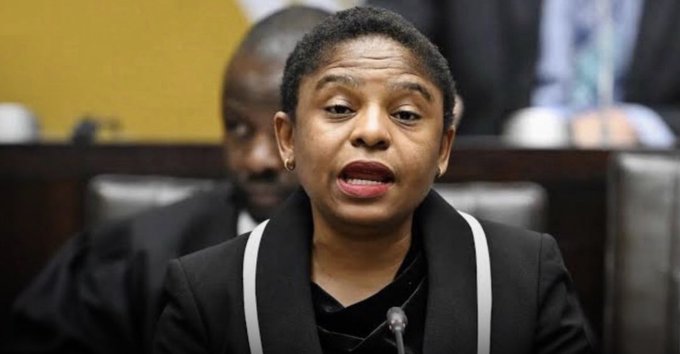
- The South African government has clarified its position on illegal properties, insisting that no compensation will be paid for unlawful structures while calling on the public and international partners to provide the locations of suspected drug dens for immediate action.

The South African government has declared that no compensation will be paid for illegal structures, while urging anyone with information about suspected drug dens to provide their exact locations so security agencies can take swift action.
Speaking on the issue, Minister in the Presidency Khumbudzo Ntshavheni explained that all legally owned properties in South Africa are officially recorded through systems such as the Deeds Register, NATIS and the Companies and Intellectual Property Commission (CIPC).
According to her, any structure that is not legally registered—particularly those built in informal settlements—does not enjoy legal protection under South African law.
She stressed that the government would continue removing illegal structures through lawful processes backed by court orders.
Foreign Property Owners
Ntshavheni also clarified that foreign nationals who legally own property in South Africa have the right to sell their properties through the normal market process before leaving the country.
However, she maintained that this protection does not extend to illegally occupied land or unregistered structures.
Government Demands Locations of Drug Dens
Addressing concerns over criminal activities, the minister called on individuals, communities and international partners to provide credible information about suspected drug dens.
She said authorities require specific locations to enable law enforcement agencies investigate and dismantle illegal drug operations.
The government’s comments have sparked widespread debate on social media, with many interpreting the statement as part of broader efforts to tackle organised crime, illegal settlements and urban security challenges.
Migration and Security Debate
The latest remarks have also fueled discussions around migration, informal housing and crime in South Africa.
Analysts say the government’s position reflects its ongoing enforcement of existing laws governing land ownership, urban development and public safety rather than introducing new policies.
Others believe the reference to suspected drug dens has intensified conversations about cross-border crime, immigration and law enforcement cooperation.
As public reactions continue, observers say further clarification from South African authorities may help distinguish between immigration policy, property rights and criminal investigations, while ensuring diplomatic relations with other countries remain unaffected.






Elochukwu Ohagi Describes Nnamdi Kanu as ‘Anointed Builder’ in Biafran Cenotaph Tribute
Elochukwu Ohagi has described Nnamdi Kanu as an “anointed builder” and “divine instrument” in the struggle for Biafran restoration, highlighting...


Delta Commissioner, Three Others Arrested Over Deputy Director’s Death
Five suspects are now in custody, while police have declared two others wanted as investigations into the ministry official’s death...

Kanu Family Fires Back: ‘No Statutory Transition Means No Valid Sentence’
The Okwu-Kanu Family has called for the immediate hearing of Nnamdi Kanu’s appeal, questioning the written law underpinning his conviction...


IPOB Accuses Nigerian Judiciary of ‘Judicial Banditry’ Over Nnamdi Kanu Conviction
IPOB has accused the Nigerian judiciary of violating constitutional provisions in Nnamdi Kanu’s conviction, questioning the legal basis of the...

IPOB: Nnamdi Kanu Must Be Released Unconditionally, Appeal Must Be Listed — Chris Nwaọgụ
IPOB has renewed its demand for the immediate and unconditional release of Nnamdi Kanu, while calling for his pending appeal...


‘Show Me the Law’ Is Not a Joke — It Is Section 36, Section 122, and the Supreme Court, Spoken from the Dock
Ifedi argues that Kanu’s conviction relied on a repealed terrorism law, raising fundamental constitutional questions about its validity.
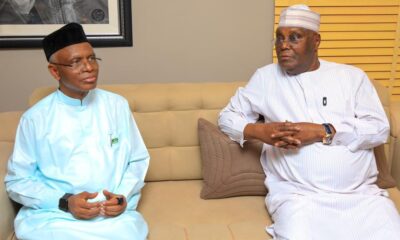

BREAKING: Atiku Appoints El-Rufai, Hayatu-Deen in ADC Presidential Campaign Council
Atiku Abubakar has announced the appointment of Nasir el-Rufai and Mohammed Hayatu-Deen to key positions in his African Democratic Congress,...


NECO Releases 2026 SSCE Results, Records Drop in Examination Malpractice
NECO has released the 2026 SSCE results, with 1,496 candidates recorded for examination malpractice, representing a 64.74% decrease from 2025.


PHOTOS: Anthony Joshua Endures ‘Torture’ Training Ahead of Fury Fight
Anthony Joshua has stepped up his preparations for a potential Tyson Fury showdown with an unusual stretching machine that has...


Umahi Orders Tinubu’s Pictures on First Niger Bridge
Works Minister David Umahi has ordered that President Bola Tinubu’s pictures be displayed on the First Niger Bridge after its...