
News
INEC Can’t Conduct Truly Independent Elections Without Financial Autonomy – Chairman
The Chairman of the Independent National Electoral Commission (INEC), Prof. Joash Amupitan, has warned that the commission cannot be truly independent without financial autonomy.

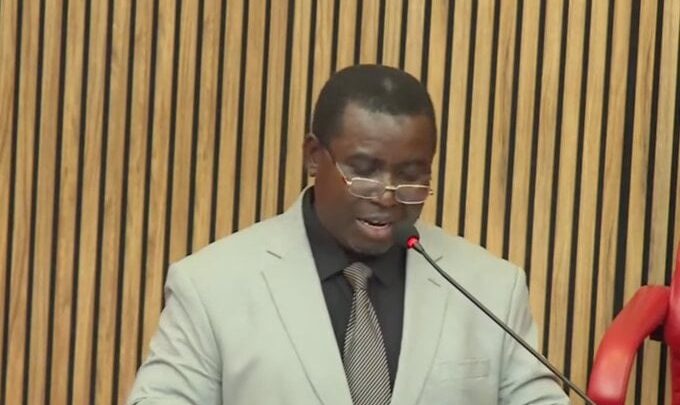
- The Chairman of the Independent National Electoral Commission (INEC), Prof. Joash Amupitan, has warned that the commission cannot be truly independent without financial autonomy.

The Chairman of the Independent National Electoral Commission (INEC), Prof. Joash Amupitan, has declared that the electoral body cannot be truly independent without financial autonomy, warning that continued dependence on the normal budgetary process weakens its operational independence and could undermine efforts to conduct free, fair and credible elections in 2027.
Amupitan made the remarks while delivering the keynote address at the public presentation of “Shadows: Protest Essays on Africa’s Most Consequential Country (1999–2023),” a book authored by THISDAY Managing Director, Mr. Eniola Bello, at the Shehu Musa Yar’Adua Centre in Abuja.
According to him, discussions about electoral reforms should go beyond changes to electoral laws and focus on ensuring that INEC has the financial independence needed to carry out its constitutional responsibilities without undue influence.
He argued that while the Constitution provides that INEC’s funding comes from the Consolidated Revenue Fund, the commission still depends on the normal appropriation process, making genuine financial independence difficult.
“Can INEC truly be independent without financial autonomy? If we are serious about strengthening our institutions and conducting free, fair and credible elections, then financial autonomy is essential,” Amupitan said.
He added:
“The Constitution places INEC’s funding on the Consolidated Revenue Fund, and many believe that is sufficient. However, experience has shown that as long as INEC remains subject to the normal appropriation process and depends on budgetary approvals by other institutions, genuine financial independence remains difficult.”
The INEC chairman explained that the commission’s responsibilities extend far beyond conducting elections, noting that it oversees federal and state elections, supports local government elections in some capacities, registers voters and political parties, monitors political parties, and maintains the national voter register.
He said these responsibilities justify granting the electoral commission greater financial and operational independence.
“For these reasons, there is a strong case for giving INEC greater operational and financial autonomy to improve efficiency and strengthen public confidence in the electoral process,” he stated.
Amupitan also stressed that the responsibility for conducting credible elections does not rest solely on INEC.
According to him, political parties, security agencies, the media, civil society organisations and Nigerians all have important roles to play in strengthening the country’s democratic process.
“When we talk about strengthening institutions, there are several institutions involved in the conduct of elections. Most times, people think only of the Independent National Electoral Commission, but beyond INEC, we also have the media, the security agencies, civil society organisations and, indeed, the Nigerian people. The health of our democracy is reflected in the strength of this wider institutional framework,” he said.
He recalled that the Inter-Parliamentary Council had long recognised that building democratic institutions is a collective responsibility involving governments, voters and political actors.
“Therefore, if we truly want the 2027 elections to be free, fair, credible and peaceful, all these institutions must work together,” he added.
Speaking on concerns surrounding the appointment of INEC’s leadership, Amupitan noted that the Constitution already provides safeguards by requiring the President to appoint the Chairman and National Commissioners in consultation with the Council of State and subject to confirmation by the Senate.
However, he argued that Nigeria’s challenge often lies not in the provisions of the law but in how those entrusted with implementing it carry out their responsibilities.
“Sometimes, however, the issue is not the law itself but those who operate it,” he said.
He referenced former Chief Justice of Nigeria, Justice Aloma Mukhtar, who had argued that Nigeria’s problem is less about replacing the Constitution than faithfully implementing both the Constitution and the Electoral Act.
Amupitan also described Eniola Bello’s two-volume publication as an important contribution to Nigeria’s democratic development, noting that the more than 900-page work chronicles the country’s political journey from the return to democratic rule in 1999 up to 2023.
According to him, the publication offers valuable lessons as Nigeria prepares for the 2027 general elections.
“Every election teaches us lessons, and every electoral cycle provides an opportunity to improve on the last,” he said.






Ebola in Nigeria: How to Protect Yourself, Symptoms to Watch and Where to Get Help
Following the confirmation of an Ebola case in Abuja, here is essential safety advice for Nigerians, healthcare workers and travellers,...

Ebola: WHO Advises Against Travel, Trade Restrictions After Nigeria Confirms Case
WHO has advised against travel and trade restrictions on Ebola-affected countries as Nigeria monitors 44 contacts following an imported case...


Ebola: Five Things to Know About Bundibugyo Virus as Nigeria Confirms First Case
Nigeria has confirmed an imported Bundibugyo Ebola case in Abuja. Here are five key facts about its symptoms, transmission, treatment...


Italy Rejects 2,220 Nigerians Seeking Asylum
Italy rejected 2,220 Nigerian asylum claims in first-instance decisions in 2025, while 1,175 Nigerians received protection and 4,120 cases remained...

Dangote Buys 25% Stake in Kenya Pipeline Network, Plans $50bn Expansion
Aliko Dangote says his Group has acquired a stake in Kenya’s petroleum pipeline network as it expands fuel distribution infrastructure...


28-Year-Old POS Operator Sentenced to Death by Hanging Over Role in Kidnap Gang
An Imo court has sentenced a 28-year-old POS operator to death over his involvement in the abduction and murder of...

UTME: JAMB Considers Life Skills, Critical Thinking Tests for Admission Seekers
JAMB is considering adding life skills and critical thinking to the UTME, while introducing procedures to help candidates resolve discrepancies...

AAC Writes Tinubu, Demands Aso Rock, Food and Logistics for 5,000 Supporters at Sowore’s Inauguration
The AAC has requested permission to inaugurate Sowore’s presidential campaign council at Aso Rock, asking the Presidency to provide refreshments...


Jurisprudential Collapse & Judicial Fear” The Jurisprudential Collapse in FRN v. Kanu: Why the Judiciary Is Running Scared of Section 36(12)”
Legal practitioner Christopher Chidera argues that the conviction of the detained Indigenous People of Biafra (IPOB) leader, Nnamdi Kanu...

2027: North Will Reject Tinubu and His Money — Hakeem Baba-Ahmed Says
Hakeem Baba-Ahmed has accused Tinubu’s administration of neglecting Northerners and warned against financial inducements...