
News
Jehovah’s Witnesses Make Fresh Decision on Blood Transfusions
Jehovah’s Witnesses have announced a change concerning the four main components of blood.

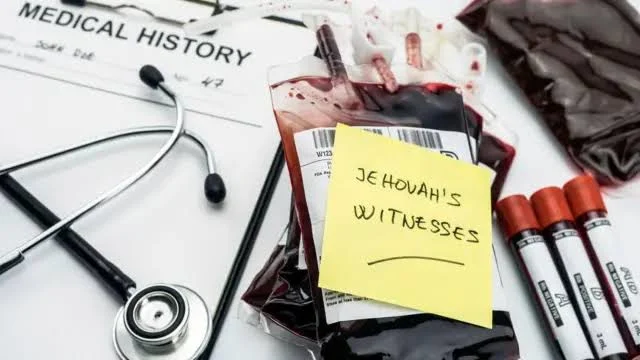
- Jehovah’s Witnesses have announced a change concerning the four main components of blood.

The Governing Body of Jehovah’s Witnesses has announced an adjustment to its position on blood, allowing individual members to make personal decisions about accepting or donating the four main components of blood.
The organisation announced the change in a statement issued by its World Headquarters in Warwick, New York, and published on its website on Friday.
According to the statement, decisions concerning the acceptance of red blood cells, white blood cells, plasma or platelets from another person are now considered matters of individual conscience.
“The decision to accept red cells, white cells, plasma or platelets from another person’s blood is a matter of personal conscience,” the organisation stated.
It also said members would individually decide whether to donate blood specifically for the purpose of providing components or fractions for another person.
“Each Witness must decide whether or not to donate blood for the clearly expressed purpose of providing components or fractions for use by another person,” the statement added.
Whole-blood transfusion position remains unchanged
Despite the adjustment, Jehovah’s Witnesses said their long-standing position against receiving whole blood from another person remains unchanged.
The organisation said its refusal of whole-blood transfusions continues to be based on its religious interpretation of the biblical command to “abstain from blood.”
“The long-standing refusal of whole-blood transfusions on religious grounds, a core teaching based on the command to ‘abstain from blood’ (Acts 15:20), is unchanged,” the statement said.
Paul Gillies, an international spokesman for Jehovah’s Witnesses at the organisation’s World Headquarters, said blood continues to hold religious significance for members.
“Blood remains sacred to Jehovah’s Witnesses, who continue to regard life and blood as precious gifts from God,” Gillies said.
He added that decisions concerning medical treatment involving blood components would remain matters of conscience between individual members and their God.
“We recognise that medical decisions involving blood components are a matter of conscience between each Witness and their God, Jehovah,” he said.
Members to make individual decisions
The organisation said the latest adjustment follows earlier changes concerning blood fractions and the use of a person’s own blood during medical procedures.
It explained that the Bible does not specifically address decisions concerning the four main components, leading the organisation to treat such matters as individual conscience issues.
“Since the Bible does not comment on such decisions, they are a matter of individual conscience. That same reasoning has now been extended to the four main components of blood,” the statement said.
The organisation also stressed that Jehovah’s Witnesses continue to seek medical treatment and do not practise faith healing.
“Jehovah’s Witnesses love life and want the best available medical care. They do not practise faith healing, and they seek out doctors who can provide effective treatment in accord with their wishes, values and beliefs,” the statement said.
Gillies said local congregations would not interfere with members’ personal decisions concerning blood components.
“Congregations do not involve themselves in personal decisions that rest with the individual conscience. We will continue to respect and support the personal decisions of our fellow believers,” he said.
He also expressed appreciation for medical professionals who provide treatment while respecting the wishes and beliefs of individual Jehovah’s Witnesses.
The organisation said Jehovah’s Witnesses number more than nine million worldwide, with congregations across more than 200 countries and territories.
The latest announcement follows an earlier clarification concerning the use of a member’s own blood during surgery and other medical procedures.
Under that earlier position, individual Witnesses could decide whether their own blood could be removed, stored and returned to them during medical treatment, while the organisation maintained its position against receiving blood from another person.






Jehovah’s Witnesses Make Fresh Decision on Blood Transfusions
Jehovah’s Witnesses have announced a change concerning the four main components of blood.


BREAKING: FG Suspends 21 NSCDC Officers, Releases Full List
The Federal Government has suspended the Niger State Commandant of the NSCDC and 20 other officers following the deaths of...


FG Gives Fresh Update as 10-Member Panel Probes Deaths of 37 NSCDC Detainees
The Federal Government has constituted a 10-member independent committee to investigate the deaths of 37 suspected illegal miners...


Alex Otti Gives Fresh Update on Political Future, Says He Will Retire After Tenure
Abia State Governor Alex Otti has said he will retire from active politics after completing his tenure, ruling out a...


BREAKING: FG Plans Low-Key 66th Independence Celebration for Nigerians
President Bola Tinubu will address Nigerians in a nationwide broadcast on October 1 as the Federal Government prepares a low-key...


BREAKING: Youths Seeks Release of #EndSARS Report
Ogun youths have urged Governor Dapo Abiodun to make public the report of the state’s Judicial Panel of Investigation on...


Meet the 3 New Super Eagles Stars Set for Their First Nigeria Call-Up
George Ilenikhena, Isaac James and Moses Usor have earned their first Super Eagles invitations as Nigeria prepare for crucial 2026...


BREAKING: Tinubu Gives Fresh Order Over Deaths of 37 Miners
President Bola Tinubu has ordered a full and transparent investigation into the deaths of 37 miners in NSCDC custody in...


Burna Boy Set to Make History Again as He Headlines NFL’s First-Ever Paris Game
Nigerian Afrobeats superstar Burna Boy will return to Paris’ Stade de France in October to headline the halftime show for...

Dangote Refinery Reveals Why Falling Crude Prices May Not Hurt Its Profits
Dangote Refinery has assured prospective investors that a possible decline in crude oil prices after the US-Iran conflict will not...